-
×
 TNPSC அறிவியல் - வேதியியல்
1 × ₹450.00
-
×
 TNPSC அறிவியல் - இயற்பியல்
1 × ₹600.00
Subtotal: ₹1,050.00
 TNPSC அறிவியல் - வேதியியல்
1 × ₹450.00 TNPSC அறிவியல் - இயற்பியல்
1 × ₹600.00
Subtotal: ₹1,050.00
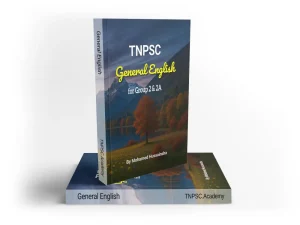 TNPSC General English Book - for Group 2 & 2A
Original price was: ₹1,000.00.₹850.00Current price is: ₹850.00.
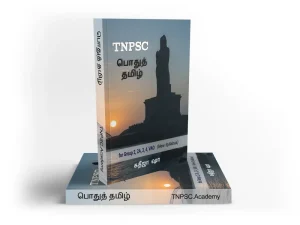 TNPSC பொதுத் தமிழ் Book - for Group 2, 2A, 3, 4 & VAO
Original price was: ₹1,000.00.₹850.00Current price is: ₹850.00.





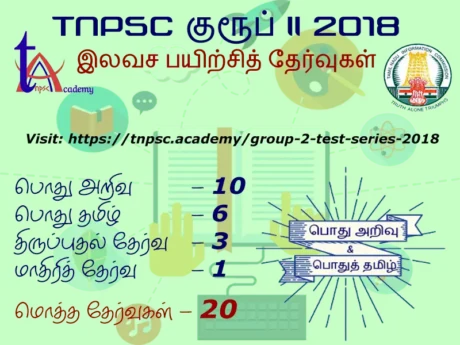
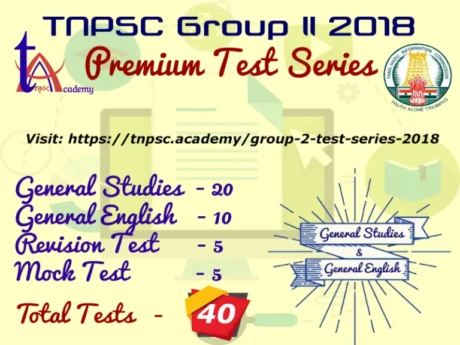



www.tnpsc.academy – TNPSC Current Affairs January 03, 2019 (03/01/2019)
Download as PDF
Topic: Profile of States, Latest Diary of Events
Assam Accord
The Union Home Ministry will set up a high-level committee to look into the implementation of Clause 6 of the Assam Accord. The composition and terms of reference of the committee, which will also look at issues related to the Bodo community, will be announced later.
What does Clause 6 state?
Clause 6 of the Assam Accord “envisaged that appropriate constitutional, legislative and administrative safeguards shall be provided to protect, preserve and promote the cultural, social, linguistic identity and heritage of the Assamese people.”
The Committee will:
Hold discussions with all stakeholders and assess the required quantum of reservation of seats in the Assam Assembly and local bodies for Assamese people.
Look at measures to protect Assamese and other indigenous languages of Assam, reservation in state government jobs, and other steps to protect, preserve and promote cultural, social, linguistic identity and heritage of Assamese people.
Suggest constitutional, legislative and administrative safeguards and examine the effectiveness of actions since 1985 to implement the clause.
Look into issues of the Bodo people, especially the measures mentioned in the Memorandum of Settlement signed between the Government of India, Assam government and the Bodo Liberation Tigers Force in 2003.
Significance:
The setting up of the committee will pave the way for the implementation of the Assam Accord in letter and spirit and will help fulfill longstanding expectations of Assamese people.
The Union Cabinet’s announcement comes at a time when Centre is facing criticism in Assam over the Citizenship (Amendment) Bill, 2016, which proposes to make minority (non-Muslim) immigrants from three neighbouring countries — Bangladesh, Afghanistan and Pakistan — eligible for Indian citizenship.
But as per the Assam Accord, any person who came to the state after the midnight of March 24, 1971, will be identified as a foreigner. So the proposed Bill is seen to violate the Assam Accord by differentiating between migrants on the basis of religion.
What is Assam Accord?
The Assam Accord (1985) was a Memorandum of Settlement (MoS) signed between representatives of the Government of India and the leaders of the Assam Movement in New Delhi on 15 August 1985.
The accord brought an end to the Assam Agitation and paved the way for the leaders of the agitation to form a political party and form a government in the state of Assam soon after.
As per the Accord, those Bangladeshis who came between 1966 and 1971 will be barred from voting for ten years. The Accord also mentions that the international borders will be sealed and all persons who crossed over from Bangladesh after 1971 are to be deported.
Though the accord brought an end to the agitation, some of the key clauses are yet to be implemented, which has kept some of the issues festering.
_
Topic: India and its Neighbouring Countries, Latest Diary of Events, General Administration
Agreement on Prohibition of Attacks against Nuclear Installations and Facilities
Both India and Pakistan have exchanged their list of nuclear installations. The exchange was in accordance with the Agreement on Prohibition of Attacks against Nuclear Installations and Facilities between Pakistan and India.
Background:
The exchange is done each year on January 1, under the Agreement on the Prohibition of Attack against Nuclear Installations and Facilities, also referred to as the Non-Nuclear Aggression Agreement.
About the Agreement on the Prohibition of Attack against Nuclear Installations:
The agreement, which was signed on December 31, 1988, and entered into force on January 27, 1991, provides that the two countries inform each other of nuclear installations and facilities to be covered under the pact on the first of January of every calendar year.
Significance of the agreement:
The need for the agreement had been felt against the backdrop of Israel’s 1981 bombing of Iraq’s Osirak reactor near Baghdad. The strike, carried out by Israeli fighter jets over hostile airspace, had set Iraq’s nuclear weapons programme significantly.
The agreement had also come at a time of deep anxiety for Pakistan. Islamabad had been rattled by the memory of the 1972 defeat which dismembered the country, and military developments in India, such as Operation Brasstacks in 1987, which was a wargame exercise to prepare for deep strike offensive capabilities. Pakistan had at the time responded by putting at its nuclear installations and assets on ‘high alert’.
_
Topic: New inventions on Science and Technology, Latest Diary of Events
A paper sensor that can detect freshness of milk
Scientists at Indian Institute of Technology, Guwahati, have developed a simple paper kit that can test freshness of milk and tell how well it has been pasteurized. Aided with a smart phone app, the kit can help ensure that milk is consumed before it turns too sour.
Background:
Milk being widely consumed food, its safety is of prime concern to consumers. More so because it is highly perishable and prone to action of enzymes and microorganisms inherently present in it. Although pasteurization, freezing and preservation using additives are widely used to prevent spoilage, perishability of milk is still a concern.
The new method- how it works?
A milk enzyme, Alkaline Phosphatase or ALP, is considered an indicator of milk quality because its presence even after pasteurization indicates presence of microbes that may not have been rendered inactive with pasteurization.
Researchers used ordinary filter paper to prepare the detector. The filter paper was cut into small discs and impregnated with chemical probes that preferentially react with ALP. The ‘probes’ used are antibodies that specifically bind to ALP. When ALP comes into contact with the probe, it turns white paper disc into a coloured one.
The colour change on paper discs is then photographed by a smartphone camera and images processed to obtain corresponding colour values. These values are then compared with standard data stored in the phone. Thus not only the presence of ALP could be detected but the amount of it in milk could also be measured.
_
Topic: Eminent Persons in News, Latest Diary of Events
Achrekar, Tendulkar’s guru, passed away
Ramakant Achrekar, who has honed a battery of Test cricketers including Sachin Tendulkar, died at his residence.
Achrekar served as a cricket coach on the Mumbai maidans for more than four three decades until he was paralysed in the late 1990s.
At least a dozen of disciples — including Balwinder Singh Sandhu, Chandrakant Pandit, Lalchand Rajput, Tendulkar, Vinod Kambli, Pravin Amre, Sameer Dighe, Ajit Agarkar, Paras Mhambrey, Ramesh Powar — represented India in Tests and many others succeeded in first-class cricket.
_
Topic: Awards and Honours, Persons in News
World Memory Championships
A 12-year-old Indian-origin student from Singapore has won the two gold medals at the World Memory Championships held in Hong Kong.
Dhruv Manoj won in the “names and faces” and “random words” disciplines, beating 56 other contestants in the “kids category” in the competition held from December 20-22.
Dhruv, who just finished primary school, memorised more than seven decks of shuffled cards in an hour; 1,155 binary numbers in half that time; and 87 names and faces in 15 minutes.
The only Singaporean in the competition of over 260 contestants from China, Russia, India, Taiwan and Malaysia, Dhruv stood out with his stupendous memory.