
TNPSC Books
-
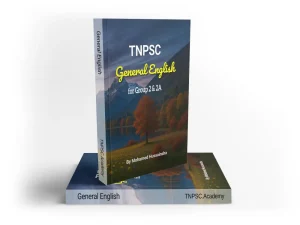 TNPSC General English Book - for Group 2 & 2A
Original price was: ₹1,000.00.₹850.00Current price is: ₹850.00.
-
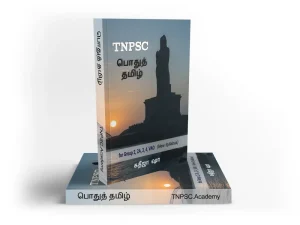 TNPSC பொதுத் தமிழ் Book - for Group 2, 2A, 3, 4 & VAO
Original price was: ₹1,000.00.₹850.00Current price is: ₹850.00.
Group 1 Courses

TNPSC Group 1 - Test Series - 2019
Original price was: ₹3,500.00.₹2,800.00Current price is: ₹2,800.00. 542
Group 1 | Postal and Online Test Series | 2022
Original price was: ₹3,200.00.₹2,800.00Current price is: ₹2,800.00. 88
Class Tests
PRIVATE 67


Group 2 & 2A Courses

TNPSC Group 2 and 2A - Test Series - 2019
Original price was: ₹2,400.00.₹1,800.00Current price is: ₹1,800.00. 527
TNPSC Group 2 and 2A MAINS - 2022
PRIVATE 344
TNPSC Group 2 and 2A - Test Series - 2019 - தமிழ்
Original price was: ₹2,400.00.₹1,800.00Current price is: ₹1,800.00. 175Class Tests
PRIVATE 67


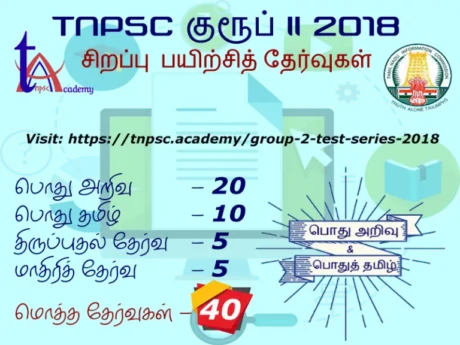


TNPSC – MEASURES OF TIME
Measures of Time:
A unit of measurement is a quantity used as a standard to express a physical quantity. The following are the basic quantities being measured and the respective units used:
(i) Length
Length – describes how long something is. Distance, height, thickness, and depth also use the same units.
Some of the common units are as follows:
==> millimeter (mm) – a metric unit commonly used to express the length of very small objects like keys, and thickness of small objects like notebook.
==> centimeter (cm) – a metric unit commonly used to express the length of small objects. It is also used in measuring the height of a person.
==> inch (in) – an English unit commonly used to express the length of small objects such as boxes and bottles.
==> foot (ft) – an English unit equivalent to 12 inches. It is commonly used to express short distances, and height of all objects like trees and buildings.
For short distances, the metric unit meter (m) and the English unit yard (yd) are commonly used.
For long distances, the metric unit kilometer (km) and the English unit mile (mi) are commonly used.
(ii) Mass
Mass – describes how heavy something is.
Some of the common units are as follows:
==> milligram (mg) – a metric unit commonly used to express the mass of very small objects like candy.
==> gram (g) – a metric unit which is the base unit for mass. It is commonly used to express the mass of small objects like orange, egg, and tomato.
==> ounce (oz) – an English unit commonly used to express the mass o
==> kilogram (kg) – an English unit commonly used for measuring short distances, and height of tall objects like trees and buildings.
==> pound (lb) – an English unit commonly used for measuring short distances, and height of tall objects like trees and buildings.
==> ton – an English unit commonly used for measuring short distances, and height of tall objects like trees and buildings.
(iii) Time
Time – describes how long it takes to do something.
Both the metric and English system uses the same units of measurement for time.
Some of the common units are as follows:
==>second (s) – is the base unit for time. One second is equivalent to a tick of a clock’s second hand.
==>minute (min) – is a unit equivalent to one revolution of the clock’s second hand or one tick of the clock’s long (minute) hand.
==>hour (hr) – is a unit equivalent to one revolution of the clock’s long (minute) hand or one tick of the clock’s short (hour) hand.
==>day (d) – is a unit equivalent to two revolutions of the clock’s short (hour) hand.
==>week (wk) – is a unit equivalent to 7 days.
==>month (mo) – is a unit equivalent to 30 days. It is commonly used in determining the age of an infant or a baby animal.
==>year (yr) – is a unit equivalent to 12 months. It is commonly used in determining the age of a person or an object.
(iv) Area
Area – describes how much surface is occupied by something.
The measurement for area uses the same units of measurement for length. The only difference is that the units are “squared” since area is a product of two dimensions (usually length and width, which uses the same unit).
Some of the common units are as follows:
==> square centimeter (cm2 or sq. cm) – is a metric unit equivalent to a square with sides 1 cm each. Typically used in measuring small areas such as chessboard.
==> square foot (ft2 or sq. ft) – is an English unit equivalent to a square with sides 1 ft each. Typically used in measuring the floor or room area.
==> square meter (m2 or sq. m) – is a metric unit equivalent to a square with sides 1 m each. Typically used in measuring the area of a residential lot.
==> acre – is an English unit used to measure land area such as farms and amusement parks.
==> hectare (ha) – is a metric unit equivalent to a square with sides 100 m each. Like acre, it is primarily used in land measurement.
(v) Volume
Volume – describes how much space (or liquid) is occupied (or contained) by something. Similar to area, volume also uses the units of length but the only difference is that the unit is “cubed”. Cubed units are typically used for volumes of space while there are also units of volume dedicated for liquid measurements.
Some of the common units are as follows:
==> milliliter (mL) – is a metric unit commonly used for measuring small amounts of liquid such as perfume.
==> cubic centimeters (cm3 or cc) – is a metric unit for volume (both space and liquid) corresponding to a cube with sides 1 cm each. A cubic centimeter is equivalent to a milliliter.
==> fluid ounce (fl oz) – is an English unit commonly used for measuring liquids in bottles such as soft drinks.
==> cup – is an English unit equivalent to 8 fluid ounces. It is commonly used in measuring ingredients for cooking and baking.
==> pint (pt) – is an English unit equivalent to 2 cups. It is commonly used in different commodities.
==> quart (qt) – is an English unit equivalent to a quarter of a gallon.
==> liter (L) – is the base unit for volume. It is commonly used in measuring large amount of liquid such as gasoline.
==> gallon (gal) – is an English unit counterpart for liter.
(vi) Temperature
Temperature – describes how hot or cold something is.
The following are the common units:
==> Celsius scale (°C) – is a metric unit for temperature and the most commonly used unit of temperature worldwide. In this scale, the boiling point of water is at 100°C while the freezing point is at 0°C.
==> Fahrenheit scale (°F) – is an English unit for temperature, which is commonly used in United States. In this scale, the boiling point of water is at 212°F while the freezing point is at 32°F.
==> Kelvin scale (K) – is a SI unit for temperature. Unlike the other two temperature scales, the Kelvin scale does not use degrees. Its zero point, 0 K, is defined as the coldest possible temperature which is also called absolute zero.