
Subtotal: ₹850.00
TNPSC Books
-
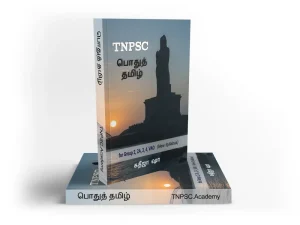 TNPSC பொதுத் தமிழ் Book - for Group 2, 2A, 3, 4 & VAO
Original price was: ₹1,000.00.₹850.00Current price is: ₹850.00.
-
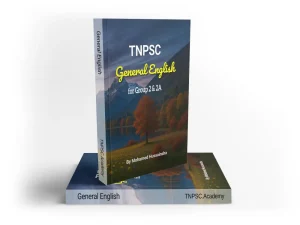 TNPSC General English Book - for Group 2 & 2A
Original price was: ₹1,000.00.₹850.00Current price is: ₹850.00.
Group 1 Courses

TNPSC Group 1 - Test Series - 2019
Original price was: ₹3,500.00.₹2,800.00Current price is: ₹2,800.00. 542
Group 1 | Postal and Online Test Series | 2022
Original price was: ₹3,200.00.₹2,800.00Current price is: ₹2,800.00. 88
Class Tests
PRIVATE 67


Group 2 & 2A Courses

TNPSC Group 2 and 2A MAINS - 2022
PRIVATE 344Class Tests
PRIVATE 67
TNPSC Group 2 and 2A - Test Series - 2019
Original price was: ₹2,400.00.₹1,800.00Current price is: ₹1,800.00. 527
TNPSC Group 2 and 2A - Test Series - 2019 - தமிழ்
Original price was: ₹2,400.00.₹1,800.00Current price is: ₹1,800.00. 175

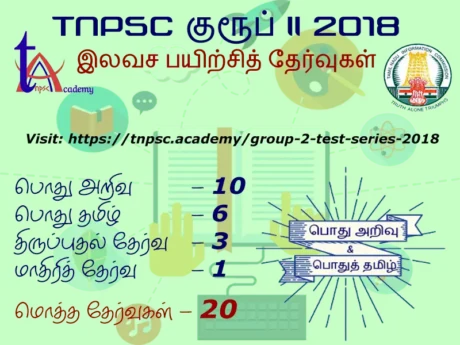

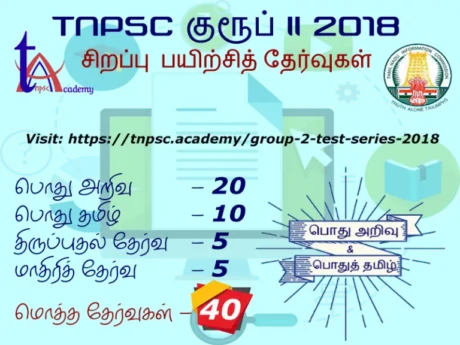


www.tnpsc.academy – TNPSC Current Affairs Oct 09, 2019 (09/10/2019)
Download as PDFTopic: Latest Diary of Events
WHO issues first World report on vision
WHO has launched it’s first World report on vision.
Key facts:
At least 2.2 billion people have vision impairment or blindness, of which over 1 billion cases could have been prevented or have yet to be addressed.
The burden of eye conditions and vision impairment is not borne equally: it is often far greater in people living in rural areas, those with low incomes, women, older people, people with disabilities, ethnic minorities and indigenous populations.
US$14.3 billion is needed to address the backlog of 1 billion people living with vision impairment or blindness due to short and far sightedness, and cataracts.
Main causes of rising cases of vision impairment:
Ageing populations, changing lifestyles and limited access to eye care, particularly in low- and middle-income countries, are among the main drivers of the rising numbers of people living with vision impairment.
_
Topic: Awards and Honours, Persons in News
Nobel Prize in Physics
Three scientists- Canadian-American cosmologist James Peebles and Swiss astronomers Michel Mayor and Didier Queloz- have jointly been awarded the 2019 Nobel Prize in physics for encouraging the growth of the “understanding of our place in the Universe”.
Details:
Peebles findings:
He won one-half of the prize for theoretical discoveries that have contributed to our understanding of “how the Universe evolved after the Big Bang”.
Using theoretical tools and calculations, he drew a link between the temperature of the radiation emitted after the Big Bang and the amount of matter it created.
His work showed that the matter known to us — such as stars, planets, and ourselves — only makes up five percent, while the other 95 percent is made up of “unknown dark matter and dark energy”.
Michel Mayor and Didier Queloz:
They shared the prize for their discovery of an exoplanet outside our solar system orbiting a solar-type star in the Milky Way.
They were able to detect a gaseous ball similar in size to Jupiter, orbiting a star 50 light years from our own Sun.
Harnessing the Doppler effect, the pair proved the planet, known as 51 Pegasus b, was orbiting its star.
_
Topic: Latest Diary of Events
Rafale Fighter Jet
First of 36 Rafale Fighter Jets Delivered to India by France. Rafale is a Medium Multi-Role Combat Aircraft (MMRCA). Rafale is a French word meaning “gust of wind”.
It is a French-origin Delta winged, twin-engine multirole fighter aircraft manufactured and designed by Dassault Aviation.
The Rafale is 15.27 metre long and a wingspan of 10.80 metre. The empty weight of Rafale ranges from 9900 kg to 10600 kg depending on the variant and maximum take-off weight of 24500 kg.
The engines push the Rafale to attain a high speed of 1.8 Mach (1912 kmph) and a range of more than 3700 km with 3 drop tanks.
_
Topic: Geographical Landmarks
Saturn is the planet with the highest number of moons
Recently the discovery of 20 new moons of Saturn has made Saturn the planet with the highest number of moons (82). The previous record- holder, Jupiter, has 79.
This was announced by the International Astronomical Union’s Minor Planet Center.
Of Saturn’s 20 newfound moons, 17 are retrograde, meaning they orbit in the opposite direction that Saturn rotates. Three orbit in the same direction that Saturn spins. Two of those prograde moons orbit fairly close to the planet while one oddball is farther out.
_
Topic: Profile of States
Unrepresented tribes of Meghalaya
Government of Meghalaya has decided to exclude ‘unrepresented tribes’ from the provisions of the Sixth Schedule of the Constitution.
Who are they? The five minor tribes namely, Bodo-Kachari, Hajong, Koch, Mann, and Rabha are clubbed together as ‘unrepresented tribes’ for nomination in Meghalaya’s autonomous tribal councils. They are indigenous to Meghalaya.
_
Topic: Latest Diary of Events
MOSAIC Expedition in Arctic
Among 300 scientists from the world, a 32 – year polar researcher from Kerala will be the only person to join MOSAIC expedition
MOSAIC expedition:
MOSAIC is Multidisciplinary drifting Observatory for the Study of Arctic Climate. It is the largest Arctic expedition in the history. It is being conducted Alfred Wegner Institute of Germany. It helps researchers understand the impact of climate change. The expedition intends to parameterize geophysical, atmospheric and oceanographic variables of Arctic.
What is special about the expedition?
Previous studies were for shorter duration as the thick ice sheets in the Arctic prevent access in winter. This research vessel will lock itself into a large ice sheet and will drift along with it.
125 years ago, a Norwegian explorer managed to seal his wooden ship into the ice during his 3 -year expedition in the North Pole.