
TNPSC Books
-
 TNPSC General English Book - for Group 2 & 2A
Original price was: ₹1,000.00.₹850.00Current price is: ₹850.00.
-
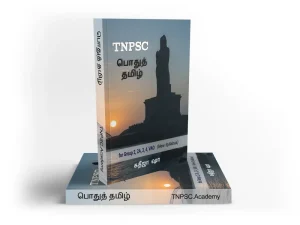
TNPSC பொதுத் தமிழ் Book - for Group 2, 2A, 3, 4 & VAO
Original price was: ₹1,000.00.₹850.00Current price is: ₹850.00.

Group 1 Courses

TNPSC Group 1 - Test Series - 2019
Original price was: ₹3,500.00.₹2,800.00Current price is: ₹2,800.00. 542
Class Tests
PRIVATE 67Group 1 | Postal and Online Test Series | 2022
Original price was: ₹3,200.00.₹2,800.00Current price is: ₹2,800.00. 88






Group 2 & 2A Courses
TNPSC Group 2 and 2A - Test Series - 2019
Original price was: ₹2,400.00.₹1,800.00Current price is: ₹1,800.00. 527TNPSC Group 2 and 2A MAINS - 2022
PRIVATE 344Class Tests
PRIVATE 67TNPSC Group 2 and 2A - Test Series - 2019 - தமிழ்
Original price was: ₹2,400.00.₹1,800.00Current price is: ₹1,800.00. 175





www.tnpsc.academy – TNPSC Current Affairs May 25, 2020 (25/05/2020)
Download as PDF
Topic: Environment and Ecology, Places in News
New plant species from Western Ghats
Three new plant species reported in the evergreen forest patches of the southern end of the Western Ghats in Kerala and Tamil Nadu. They are:
Eugenia sphaerocarpa: Belongs to the Myrtaceae or Rose apple family. Found mainly in Kakkayam area of the Malabar wildlife sanctuary in Kerala above 800m. The fruits of Eugenia species are known for their palatability.
Goniothalamus sericeus: Belongs to the Annonaceae family of custard apple. Found in the Kanyakumari wildlife sanctuary in Tamil Nadu at an altitude of 1400m. Sericeus refers to the presence of dense silky hair on petals.
Memecylon nervosum: Belongs to the Melastomataceae (Kayamboo or Kaasavu in local parlance) family. Nervosum refers to the presence of prominently raised lateral and intramarginal veins on the lower surface of the lamina.
–
Topic: Latest Diary of Events
Adenovirus COVID-19 vaccine
It uses a recombinant adenovirus type-5 vector that carries the genetic material that codes for spike glycoprotein of novel coronavirus. The adenovirus is a weakened common cold virus.
Why in News?
Phase-1 trial of this vaccine was found to be safe, well-tolerated and able to generate immune responses against the virus. The phase-2 trial will be a randomised, double-blinded and placebo-controlled trial.
_
Topic: Profile of States, Latest diary of Events
Mizoram grants ‘industry’ status to sports
First time in India, aiming to further bolster the sports activities, by attracting investment, sports have been accorded industry status in Mizoram.
Besides football, hockey, wrestling, there are a number of indigenous games such as, stick fighting, Insuknawra (rod pushing), Kalchhet kal (relay race using bamboo), Inarpathai (cock fighting) in Mizoram.
_
Topic: Latest Diary of Events, Profile of States
Shahi Lichi and Zardalu Mango
Bihar Postal Circle (Department of Posts) to deliver “Shahi Lichi” and “Zardalu Mango” at doorsteps of people.
Shahi Litchi: Grown mainly in Muzaffarpur. It has high pulp and is juicier compared to the litchi grown in other parts of the country. The conditions here are ideal for litchi cultivation, because of humid conditions and alluvial soil. Shahi Litchi has got a Geographical Indication (GI) tag.
Zardalu/Jardalu Mango: It is light yellow in colour and is known for its sweet fragrance. They are chiefly grown in Bhagalpur in Bihar. They also have the GI tags.
_
Topic: Profile of States, Latest Diary of Events
Katkari Tribe
A group of tribal youth from the Katkari community in Shahpur has come together to market Giloy, a herb used in treatment of viral fever, malaria as well as diabetes. The herb has a huge demand from pharmaceutical companies.
About Katkari Tribe:
Katkari is one of the 75 Particularly Vulnerable Tribal Groups.
Katkaris were historically forest dwellers. They are located primarily in Raigad and in parts of Palghar, Ratnagiri and Thane districts as well and in some places of Gujarat.
The British administration had classified them under the Criminal Tribes Act, 1871.
The name Katkari is derived from a forest-based activity – the making and barter or sale of Katechu (kath) from the khair tree (Acacia Katechu). It is produced by boiling wood from the Khair tree and evaporating the resulting brew.