
TNPSC Books
-
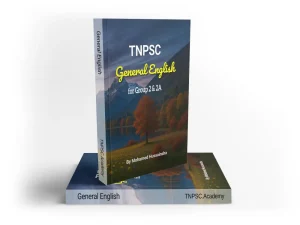
 TNPSC General English Book - for Group 2 & 2A
Original price was: ₹1,000.00.₹850.00Current price is: ₹850.00.
-
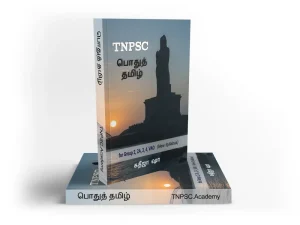
TNPSC பொதுத் தமிழ் Book - for Group 2, 2A, 3, 4 & VAO
Original price was: ₹1,000.00.₹850.00Current price is: ₹850.00.
Group 1 Courses

Class Tests
PRIVATE 67
TNPSC Group 1 - Test Series - 2019
Original price was: ₹3,500.00.₹2,800.00Current price is: ₹2,800.00. 542Group 1 | Postal and Online Test Series | 2022
Original price was: ₹3,200.00.₹2,800.00Current price is: ₹2,800.00. 88






Group 2 & 2A Courses
TNPSC Group 2 and 2A MAINS - 2022
PRIVATE 344TNPSC Group 2 and 2A - Test Series - 2019 - தமிழ்
Original price was: ₹2,400.00.₹1,800.00Current price is: ₹1,800.00. 175TNPSC Group 2 and 2A - Test Series - 2019
Original price was: ₹2,400.00.₹1,800.00Current price is: ₹1,800.00. 527Class Tests
PRIVATE 67






www.tnpsc.academy – TNPSC Current Affairs May 09, 2020 (09/05/2020)
Download as PDF
Topic: Latest Reports and Events, International Events
Stringency Index
A Stringency Index created by Oxford University shows how strict a country’s measures were, and at what stage of the pandemic spread it enforced these. As per the index, India imposed its strictest measures much earlier than others.
What is Stringency index?
The Stringency Index is a number from 0 to 100 that reflects these indicators. A higher index score indicates a higher level of stringency.
It is among the metrics being used by the Oxford COVID-19 Government Response Tracker.
The Tracker involves a team of 100 Oxford community members who have continuously updated a database of 17 indicators of government response.
These indicators examine containment policies such as school and workplace closings, public events, public transport, stay-at-home policies.
What it says about India?
India enforced one of the strongest lockdowns at an early phase of case growth. India indeed had one of the strongest lockdown measures in the world — at a 100 score since March 22.
It was relaxed slightly on April 20 after the government eased norms for certain workplaces in regions outside the red zones.
When compared to other countries with similar or higher case load, India called its strict lockdown at a much earlier point on its case and death curves.
These 18 other countries had more than 500 cases when they called their strictest lockdown, while India had 320.
Again, India had only four deaths on March 22, when its score reached 100, while most countries had more deaths at that point (except Switzerland; no deaths).
_
Topic: World Organizations, India and its Foreign Relations
Asian Infrastructure Investment Bank (AIIB)
Recently, the Asian Infrastructure Investment Bank (AIIB) has approved US$ 500 million for ‘Covid-19 Emergency Response and Health Systems Preparedness Project’ initiated by India.
Key facts:
The project will be implemented by the National Health Mission (NHM), the National Centre for Disease Control (NCDC) and the Indian Council of Medical Research (ICMR).
This new support will cover all States and Union Territories across India and address the needs of infected people, at-risk populations, medical and emergency personnel and service providers, medical and testing facilities, and national and animal health agencies.
The project will enable the government slow and limit as much as possible the spread of COVID-19 in India by providing immediate support to enhance disease detection capacities, oxygen delivery systems and medicines among others.
_
Topic: Current Socio-Economic Issues, Profile of States
Locust attacks
Locusts normally arrive during July-October, but have already been spotted in Rajasthan. At a time India is battling Covid, they present a new worry with their potential for exponential growth and crop destruction.
What are locusts? Locusts are a group of short-horned grasshoppers that multiply in numbers as they migrate long distances in destructive swarms (up to 150km in one day).
Four species of locusts are found in India: Desert locust (Schistocerca gregaria), Migratory locust (Locusta migratoria), Bombay Locust (Nomadacris succincta) and Tree locust (Anacridium sp.).
How do they inflict damage?
The desert locust is regarded as the most destructive pest in India as well as internationally, with a small swarm covering one square kilometre being able to consume the same amount of food in one day as 35,000 people.
The swarms devour leaves, flowers, fruits, seeds, bark and growing points, and also destroy plants by their sheer weight as they descend on them in massive numbers.
_
Topic: Latest Diary of Events
World Migratory Bird Day (WMBD)
The World Migratory Bird Day (WMBD) 2020 was observed on 9th May 2020. It helps to raise global awareness about threats faced by migratory birds, their ecological importance, and need for international cooperation to conserve them. The first WMBD was celebrated in 2006.
Organized By: The Convention on Migratory Species (CMS), the African-Eurasian Waterbird Agreement (AEWA) together with Environment for the Americas (EFTA).
Theme: “Birds Connect Our World”.
_
Topic: Public Awareness and General Administration
Vande Bharat Mission
It is the biggest evacuation exercise to bring back Indian citizens stranded abroad amidst the coronavirus-induced travel restrictions.
The mission has given priority to Indian citizens with “compelling reasons to return” – like those whose employment have been terminated, those whose visas have expired and not expected to be renewed under the present circumstances and those who have lost family members in recent times.
_
Topic: Latest Historical Diary of Events
May 9: Birth Anniversary of Maharana Pratap Singh I
Maharana Pratap Singh popularly known as “Maharana” was the 13th king of Mewar (the present Rajasthan). He was born on May 9, 1540.
Key facts:
The “Siege of Chittorgarh” led to the loss of fertile eastern belt to the Mughals in 1568. Akbar wanted to establish a secure route to Gujarat through Mewar.
So, he sent number of envoys to King Rana to become a vassal just like the other Rajputs. Rana refused. Hence, the Battle of Haldighati was fought.