
TNPSC Books
-
 TNPSC பொதுத் தமிழ் Book - for Group 2, 2A, 3, 4 & VAO
Original price was: ₹1,000.00.₹850.00Current price is: ₹850.00.
-
TNPSC General English Book - for Group 2 & 2A
Original price was: ₹1,000.00.₹850.00Current price is: ₹850.00.
Group 1 Courses

Class Tests
PRIVATE 67
TNPSC Group 1 - Test Series - 2019
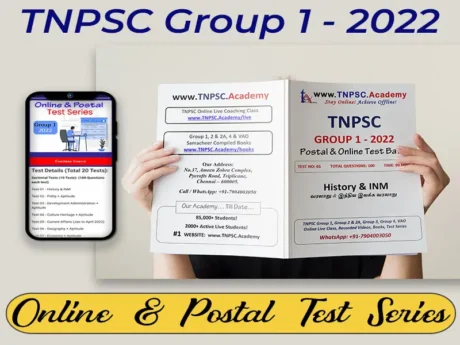
Original price was: ₹3,500.00.₹2,800.00Current price is: ₹2,800.00. 542Group 1 | Postal and Online Test Series | 2022
Original price was: ₹3,200.00.₹2,800.00Current price is: ₹2,800.00. 88



Group 2 & 2A Courses
Class Tests
PRIVATE 67TNPSC Group 2 and 2A - Test Series - 2019
Original price was: ₹2,400.00.₹1,800.00Current price is: ₹1,800.00. 527TNPSC Group 2 and 2A MAINS - 2022
PRIVATE 344TNPSC Group 2 and 2A - Test Series - 2019 - தமிழ்
Original price was: ₹2,400.00.₹1,800.00Current price is: ₹1,800.00. 175




www.tnpsc.academy – TNPSC Current Affairs March 31, 2018 (31/03/2018)
Download as PDF
Topic : India and its Neighbourhood Countries, India’s Foreign Policy, Latest Diary of Events
Diplomatic Tussle between India and Pakistan
India and Pakistan have agreed to solve the diplomatic tussle over the allegations of harassment of the diplomats in each other’s countries.
The two countries have mutually decided to resolve matters as per the 1992 code of conduct (COC) ensuring the diplomats and their families are not harassed.
1992 Code of Conduct:
As per the 1992 code of conduct, the two countries would ensure “smooth and unhindered functioning of their diplomatic and consular officials in conformity with recognised norms of international law and practice.”
The two governments will also ensure that there is “no violation of the privileges and immunities of their diplomatic and consular officials” and there should be “no offences against their dignity and person”.
What’s the issue?
The diplomatic ties of India and Pakistan took a hit over the harassment of the diplomats in each other’s countries. Both the countries have accused each other of harassing and intimidating their diplomats.
_
Topic: Science and Technology- developments and their applications
Interstitium: The latest organ discovered in human body
Scientists have discovered a new organ in the human body which they have dubbed the ‘interstitium’.
About Interstitium:
The new organ is known as the Interstitium and it is found everywhere in our bodies, acting as a shock absorber in all places where tissues are moved or subjected to force.
It lies beneath the top layer of skin, but is also in tissue layers lining the gut, lungs, blood vessels, and muscles.
The organ is a network of interconnected, fluid-filled spaces all over the body.
Scientists say, it may even be one of the largest organs in the body. The organ acts like a shock absorber in all places where tissues are moved or subjected to force.
What is the organ made of?
The organ is a network of interconnected, fluid-filled spaces all over the body and is made up of both strong (collagen) and flexible (elastin) connective tissue proteins, with interstitial fluid moving throughout.
Functions of the organ:
Interstitial spaces are organized by a collagen “mesh”, can shrink, expand, and “may thus serve as shock absorbers.”
These “dynamically compressible and distensible sinuses” act as thoroughfares to transport critical fluids within organs and around the body.
The Interstitium plays an important role in carrying lymph, the clear fluid that also travels through lymphatic vessels and supports immunity.
Significance of the discovery:
The discovery of the fluid ‘highway’ could help to explain how cancer spreads in the body, and pave the way for new ways to detect and treat the disease.
_
Topic : General Administration, Profile of States, Latest Diary of Events
Naitwar Mori Hydro Electric Project
Construction works on 60 MW Naitwar Mori Hydro Electric Project have begun.
About the project:
The Naitwar Mori Project with a generation potential of 60 MW is located on River Tons, a major tributary of River Yamuna on the Ganga basin, in Uttarkashi district of Uttarakhand state in North India.
This run-of-the river project was allocated to SJVN Ltd by the Government of Uttarakhand.
_
Topic : Persons in News, Latest Diary of Events
Anandibai Gopalrao Joshi
She was India’s first female doctor and first woman to obtain a degree in western medicine.
Why in news?
Google Doodle celebrated her 153rd Birthday on March 31st. Anandi Joshi was born on 31st March 1865 in Maharashtra.
_
Topic : Space Technology, General Administration, Latest Diary of Events
Sarmat
It is Russia’s most advanced nuclear-capable intercontinental ballistic missile. It was flight-tested recently.
Key facts:
The Sarmat is a heavy ICBM intended to replace Russia’s aging, Soviet-era missiles that form the basis of its nuclear deterrent.
The chief innovation of the Sarmat is its ability to carry a large number of guided warheads.
The missile is believed to be able to fly 16,000 miles and is capable of flying over the South Pole to strike the U.S.
NATO has named this missile as ‘Satan 2’.