
TNPSC Books
-
 TNPSC General English Book - for Group 2 & 2A
Original price was: ₹1,000.00.₹850.00Current price is: ₹850.00.
-
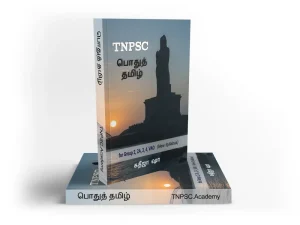
TNPSC பொதுத் தமிழ் Book - for Group 2, 2A, 3, 4 & VAO
Original price was: ₹1,000.00.₹850.00Current price is: ₹850.00.

Group 1 Courses

Group 1 | Postal and Online Test Series | 2022
Original price was: ₹3,200.00.₹2,800.00Current price is: ₹2,800.00. 88
TNPSC Group 1 - Test Series - 2019
Original price was: ₹3,500.00.₹2,800.00Current price is: ₹2,800.00. 542Class Tests
PRIVATE 67




Group 2 & 2A Courses
Class Tests
PRIVATE 67TNPSC Group 2 and 2A - Test Series - 2019
Original price was: ₹2,400.00.₹1,800.00Current price is: ₹1,800.00. 527TNPSC Group 2 and 2A - Test Series - 2019 - தமிழ்
Original price was: ₹2,400.00.₹1,800.00Current price is: ₹1,800.00. 175TNPSC Group 2 and 2A MAINS - 2022
PRIVATE 344






www.tnpsc.academy – TNPSC Current Affairs March 27, 2020 (27/03/2020)
Download as PDF
Topic: Welfare Oriented Govt Schemes and their Utilities
New measures under Pradhan Mantri Garib Kalyan Yojana
The Union Finance & Corporate Affairs Minister Smt. Niramla Sitharaman has announced Rs 1.70 Lakh Crore relief package under Pradhan Mantri Garib Kalyan Yojana for the poor to help them fight the battle against Corona Virus.
These measures are intended at reaching out to the poorest of the poor, with food and money in hands, so that they do not face difficulties in buying essential supplies and meeting essential needs.
The package includes a range of measures that the Government of India will take to alleviate the economic, health, and food-related distress of India’s poor.
Key components of the Pradhan Mantri Garib Kalyan Package:
Insurance scheme for health workers fighting COVID-19 in Government Hospitals and Health Care Centres:
Any health professional, who while treating Covid-19 patients, meet with some accident, then he/she would be compensated with an amount of Rs 50 lakh under the scheme.
PM Garib Kalyan Ann Yojana:
Under this scheme, 80 crore poor people, covering about two-thirds of the country’s population, will get 5 kg rice or wheat each month for the next three months free of charge, in addition to the 5 kg they already get. Each household will get 1 kg of dal of their choice, for next three months, also free of charge.
Besides, to ensure adequate availability of protein to all the above mentioned individuals, 1 kg per family, would be provided pulses according to regional preferences for next three months.
Benefit to farmers:
The first instalment of Rs 2,000 due in 2020-21 will be front-loaded and paid in April 2020 itself under the PM KISAN Yojana. It would cover 8.7 crore farmers.
Cash transfers Under PM Garib Kalyan Yojana:
A total of 20.40 crores PMJDY women account-holders would be given an ex-gratia of Rs 500 per month for next three months.
Gas cylinders, free of cost, would be provided to 8 crore poor families for the next three months.
Wage-earners below Rs 15,000 per month in businesses having less than 100 workers: Government proposes to pay 24 percent of their monthly wages into their PF accounts for next three months.
Support for senior citizens (above 60 years), widows and Divyang: Government will give them Rs 1,000 to tide over difficulties during next three months.
MNREGA wages would be increased by Rs 20 with effect from 1 April, 2020. Wage increase under MNREGA will provide an additional Rs 2,000 benefit annually to a worker.
Self-Help groups:
Limit of collateral free lending would be increased from Rs 10 to Rs 20 lakhs.
Other components:
Employees’ Provident Fund Regulations will be amended to include Pandemic as the reason to allow non-refundable advance of 75 percent of the amount or three months of the wages, whichever is lower, from their accounts.
Welfare Fund for Building and Other Constructions Workers: State Governments will be given directions to utilise this fund to provide assistance and support to these workers to protect them against economic disruptions.
_
Topic: International Events
South Korean model to control COVID 19 spread
The Korean Model, a vigorous regime of “trace, test, treat”, has shown remarkable results in controlling the spread of the novel coronavirus, without putting a nationwide lockdown in place.
How is the situation in Korea?
Korea is now in full control of the spread of the disease. The number of new confirmed cases per day has been showing steady decline since hitting a peak at 989 in February to double-digit figures as of mid-March.
Korea might be the only country that hasn’t imposed a lockdown within its territories or even of its international borders.
How has this been possible? What is the ‘Korean model’?
It is grounded on concentrated testing of high-risk areas and clusters.
Korea found out at the beginning of the spread of the virus that a certain religious cult and its gathering was the cause of a large portion of the spread in a certain area of the country. This group had massive gatherings in a closed-off space.
The government listed all members of the group across the country, tracked their whereabouts and conducted tests on a massive scale, leading to the rapid increase in the number of confirmed cases.
However, Korea succeeded in identifying and isolating potential cases at a very early stage and finally flattened the curve.
Other best practices followed by Korea:
The moment the virus DNA pattern was confirmed in Wuhan, Korean medical teams and bio-companies were able to develop new testing kits with surprising speed. This made it possible for Korea to conduct mass-scale testing of 18,000 cases a day.
Anybody in Korea who has symptoms or reasons to be tested can get the test within minutes at ‘drive-thru’ or ‘walk-thru’ testing centres and receive the result by text message the very next day. Korea made available over 650 testing centres nationwide.
Is it possible for India to replicate this model?
Given India’s demography and medical infrastructure, lockdowns are necessary. However, openness and transparency is important to tackling this situation, and identifying and isolating the core of the spread of the virus with full medical capacity at the earliest possible stage is key. This is the essence of the ‘Korean model’.
_
Topic: General Administration, Profile of States
38th District of Tamilnadu
Mayiladuthurai is to become Tamil Nadu’s 38th district. The existing district of Nagapattinam will be bifurcated and Mayiladuthurai will become the headquarters of the new district. Mayiladuthurai is formerly known as Mayavaram or Mayuram.
_
Topic: Latest Diary of Events
International Day of Remembrance of the Victims of Slavery and the Transatlantic Slave Trade – March 25
It is a United Nations international observance designated in 2007. March 25 – The day honours and remembers those who suffered and died as a consequence of the transatlantic slave trade, which has been called “the worst violation of human rights in history”.
_
Topic: Profile of States, Latest Diary of Events
Mo Jeeban Pogramme
The “Mo Jeeban Programme” was launched by the Odisha Government to contain the spread of COVID-19. The programme was launched by the Odisha Chief Minister Naveen Patnaik.
Key facts:
‘Mo Jeeban’ means ‘My Life’. The State Government through the programme appeals to the people to stay indoors. The programme urges the working population to take an oath in name of their children and parents to cooperate and support by not stepping outside. It also raises awareness of washing hands at least for 20 seconds.