
TNPSC Books
-
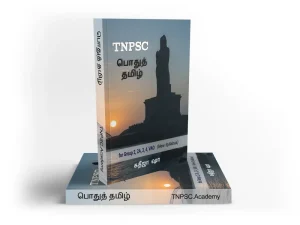
 TNPSC பொதுத் தமிழ் Book - for Group 2, 2A, 3, 4 & VAO
Original price was: ₹1,000.00.₹850.00Current price is: ₹850.00.
-
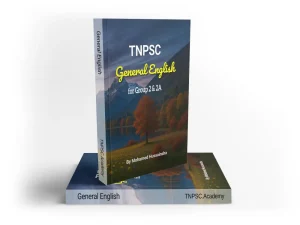
TNPSC General English Book - for Group 2 & 2A
Original price was: ₹1,000.00.₹850.00Current price is: ₹850.00.
Group 1 Courses

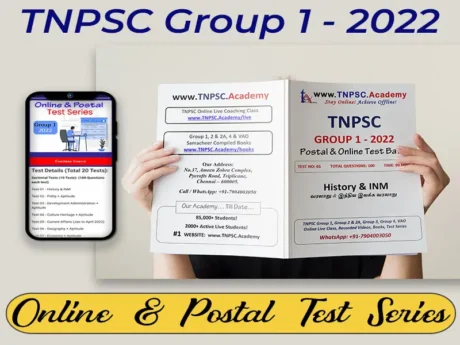
Group 1 | Postal and Online Test Series | 2022
Original price was: ₹3,200.00.₹2,800.00Current price is: ₹2,800.00. 88
TNPSC Group 1 - Test Series - 2019
Original price was: ₹3,500.00.₹2,800.00Current price is: ₹2,800.00. 542Class Tests
PRIVATE 67


Group 2 & 2A Courses
Class Tests
PRIVATE 67TNPSC Group 2 and 2A - Test Series - 2019
Original price was: ₹2,400.00.₹1,800.00Current price is: ₹1,800.00. 527TNPSC Group 2 and 2A - Test Series - 2019 - தமிழ்
Original price was: ₹2,400.00.₹1,800.00Current price is: ₹1,800.00. 175TNPSC Group 2 and 2A MAINS - 2022
PRIVATE 344



www.tnpsc.academy – TNPSC Current Affairs March 24, 2018 (24/03/2018)
Download as PDF
Topic : World Organizations, Latest Reports and Summits
KISS to host ‘Commonwealth Big Lunch’
Kalinga Institute of Social Sciences (KISS), Bhubaneswar, in partnership with British Council, India, is hosting the ‘Commonwealth Big Lunch’.
KISS is the only organisation from Asia to be selected by British Council to host the Commonwealth Big Lunch.
What is it?
British Council is celebrating 70 years of inception in Commonwealth countries. On this occasion, it has organised a mega lunch.
The initiative launched by UK PM Theresa May. The motto of the programme is to encourage people to get together to celebrate their Commonwealth connections through food.
The Commonwealth:
The Commonwealth is a voluntary association of 53 independent and equal sovereign states.
It was formally constituted by the London Declaration in 1949, which established the member states as “free and equal”.
The last country to join the Commonwealth was Rwanda in 2009.
_
Topic : Space technology, Latest Diary of Events
Chandrayaan-2
A recent report has confirmed that the launch of Chandrayaan-2, India’s second mission to the moon will be in October this year.
About Chandrayaan-2:
Chandrayaan-2 includes soft-landing on Moon and moving a rover on its surface.
It is an advanced version of the previous Chandrayaan-1 mission. It consists of an orbiter, lander and rover configuration.
The Orbiter spacecraft when launched from Sriharikota will travel to the Moon and release the Lander, which will in turn deploy a tiny Rover to roam the lunar surface — all three sending data and pictures to Earth.
It is planned to be launched as a composite stack into the earth parking orbit (EPO) of 170 X 18,500 km by GSLV-Mk II.
_
Topic: Conservation of Forests, Environment and Ecology, Latest Diary of Events
Earth Hour 2018
Earth Hour is being observed on March 24 from 8:30 to 9:30 p.m.
Earth Hour is also a “part and parcel” of the “Green Good Deeds” movement, in which every individual ought to take small, voluntary green actions to protect and conserve the environment and the earth.
What is Earth Hour?
Dating back to 2007, Earth Hour is an annual event organized by the World Wildlife Fund that promotes conservation and sustainable energy.
During this time, civilians are encouraged to switch off their lights for one hour to help reduce the effect of global warming and raise awareness for climate change and wildlife conservation.
Background:
It was famously started as a lights-off event in Sydney, Australia in 2007. Since then it has grown to engage more than 7000 cities and towns worldwide.
Today, Earth Hour engages a massive mainstream community on a broad range of environmental issues. The one-hour event continues to remain the key driver of the now larger movement.
What’s the difference between Earth Hour and Earth Day?
Whereas Earth Hour stands as a climate change initiative where people reduce their electricity usage, Earth Day (April 22) celebrates our natural environment by inspiring people to plant trees, recycle regularly and keep the planet tidy.
Why do we need earth hour?
With Earth Hour, the WWF aims to engage people across the globe to adopt more sustainable lifestyle.
Turning off lights for an hour is just an annual reminder that if the world does not mend its ways, it will be heading to a dark age, literally.
_
Topic : Latest Diary of Events, Profile of States, Geographical Events
World’s longest sandstone cave discovered in Meghalaya
Meghalaya is now also home to the longest sandstone cave in the world at 24,583m.
Key facts:
The cave system has fossils of dinosaurs, especially the Mosasaurus, a giant reptile that lived 66-76 million years ago.
The cave is Meghalaya is 6,000m longer than the current listed sandstone cave in the world, Cueva El Samán, (18,200m) in Venezuela.
_
Topic : Latest Diary of Events
World Tuberculosis Day 2018
Observed on March 24 every year, World Tuberculosis Day is designed to build public awareness about the global epidemic of TB and efforts to eliminate the disease.
World TB Day commemorates the date in 1882 when Dr. Robert Koch announced his discovery of Mycobacterium tuberculosis, the bacteria that causes TB.
The theme of World TB Day 2018 – “Wanted: Leaders for a TB-free world”.
Significance:
According to WHO, World TB Day provides a platform for affected persons and communities, civil society organizations, health-care providers, policy makers, development partners and others to advocate, discuss and plan further collaboration to fulfil the promise of reaching all people with quality TB prevention and care services, as well as enabling TB prevention through multisectoral development efforts.
Key facts:
Tuberculosis (TB) is caused by bacteria (Mycobacterium tuberculosis) that most often affect the lungs. Tuberculosis is curable and preventable.
TB is spread from person to person through the air. When people with lung TB cough, sneeze or spit, they propel the TB germs into the air.
A person needs to inhale only a few of these germs to become infected.
Ending the TB epidemic by 2030 is among the health targets of the Sustainable Development Goals.
_
Topic : Elections in India, Latest Diary of Events, General Administration
Rajya Sabha elections
Elections for 25 Rajya Sabha seats were held recently.
What is the strength of the House?
The Strength of Rajya Sabha is maximum 250 out of which 238 are state and UT representative and 12 are nominated by the President.
At Present, Rajya Sabha has 245 member out of which 229 are representative and rest nominated
What is the qualification of an RS member?
He must be a citizen of India and must not be less than 30 years of age. He must possess qualifications as may be prescribed under any law made by Parliament.
Who can vote to elect Rajya Sabha member?
Elected representatives of state legislatures vote in elections to the Upper House.
Rajya Sabha election process:
Members of state assemblies elect Rajya Sabha members by a process of indirect voting in what is called proportional representation with a single transferable vote.
Each voter ranks his preference, and if the first candidate on the list has enough votes to win or no chance of winning, the vote is transferred to the next choice and so on.
Tenure of Rajya Sabha members:
Rajya Sabha members are elected for a six-year term. One-third of the members of the Upper House of parliament retire after every two years.