-
×
 TNPSC - General Science - Biology
1 × ₹600.00
Subtotal: ₹600.00
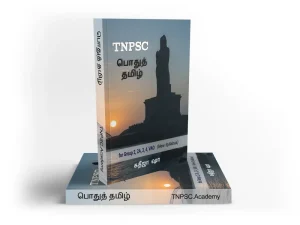 TNPSC பொதுத் தமிழ் Book - for Group 2, 2A, 3, 4 & VAO
Original price was: ₹1,000.00.₹850.00Current price is: ₹850.00.
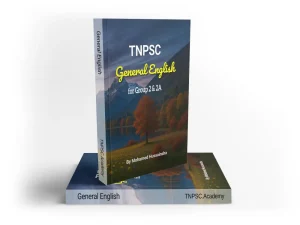 TNPSC General English Book - for Group 2 & 2A
Original price was: ₹1,000.00.₹850.00Current price is: ₹850.00.





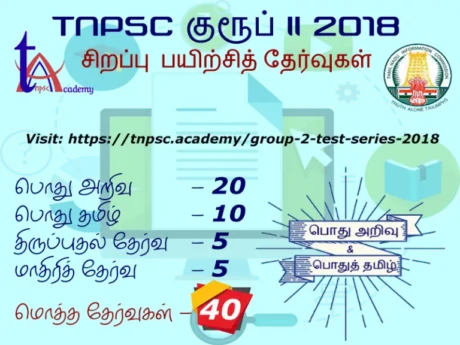


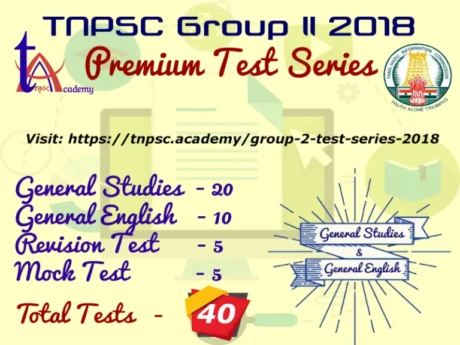

www.tnpsc.academy – TNPSC Current Affairs March 10, 2018 (10/03/2018)
Download as PDF
Topic: Security challenges and their management in border areas
First ever ‘crime-free zone’ along international border launched
In a first for both countries, the director generals of the Border Security Force (BSF) and Border Guard Bangladesh (BGB) have declared an 8.3 km stretch of the Indo-Bangladesh border as a ‘crime-free zone’.
The Crime-free zone:
The stretch covers the Gunarmath and Kalyani Border Out Posts (BOPs) in India and the Puthkhali and Daulatpur BOPs across the border.
This stretch is one of the most vulnerable with cattle smuggling and other criminal activities prevalent.
_
Topic : Profile of States, General Administration, Latest Diary of Events
Diu becomes the first and only Union Territory to be 100% solar energy efficient
In a major boost for utilisation of renewable energy in the country, Diu has become the first and only Union Territory to be fully solar energy efficient.
Key facts:
Diu’s geographical area is limited only to 42 square kilometers, however, despite the shortage of land, solar power plants have been installed at over 50 acres of land.
A total of 13 megawatts of electricity from the solar power-generating systems is generated, with 3MW generated by rooftop solar plants and 10MW by other solar power plants.
_
Topic : India’s Foreign Policy
State Visit of President to Mauritius and Madagascar (March 11-15, 2018)
The President has been invited as the Chief Guest to the commemorative events marking the 50th anniversary of the independence of Mauritius.
During the visit, the President will inaugurate the new World Hindi Secretariat building constructed with Indian assistance.
_
Topic : Books and Authors, Persons in News
Fulfilling Bapu’s Dreams – Prime Minister Modi’s tribute to Gandhiji
Sadhguru Jaggi Vasudev was formally released the book titled “Fulfilling Bapu’s Dreams – Prime Minister Modi’s Tribute to Gandhiji” at a function held at Rashtrapati Bhavan.
This book is about an important aspect of India’s developmental process – linking sanitation with broad mass participation, making it a mass movement, giving central importance to the practical needs of ordinary citizens in policy, and establishing ethical ideals firmly in public life.
_
Topic: Issues relating to development and management of Social Sector/Services relating to Health, Education, Human Resources
Passive Euthanasia legalised by Supreme Court
The Supreme Court has delivered a landmark judgment allowing “living will” where, an adult in his conscious mind, is permitted to refuse medical treatment or voluntarily decide not to take medical treatment to embrace death in a natural way.
In Its judgment, the court has laid down a set of guidelines for “living will” and defined passive euthanasia and euthanasia as well.
Passive Euthanasia:
When doctors don’t provide, or remove patients from, life sustaining treatment. Includes: Disconnecting life-support machines, feeding tubes, not carrying out life-saving operations, not providing life-extending drugs, Non-treatment not seen as cause of death; patient understood to have died because of underlying condition.
Right to Die:
Right to die peacefully is part of Fundamental Right to Life guaranteed under Article 21 of the Constitution. Article 21 provides that “no person shall be deprived of his life or personal liberty except according to procedure established by law”.
_
Topic : Government policies and interventions for development in various sectors
Rajasthan passes Bill to give death penalty for child rape
Rajasthan has passed a Bill providing for death penalty to those convicted of raping girls of 12 years and below.
The State Assembly passed the Criminal Laws (Rajasthan Amendment) Bill, 2018 seeking to amend the Indian Penal Code with the insertion of new provision by voice vote.
Key facts:
The Bill is aimed at protecting the girl child by laying down a deterrent punishment, including death sentence, to the offenders.
Background:
According to the National Crime Records Bureau’s 2016 report, the cases of crimes against children have seen a steady increase in Rajasthan.
The State recorded 4,034 such cases in 2016, which was 3.8% of the crimes against children registered across the country.
In 2015, the State had registered 3,689 cases of crimes against children.
Facts for Prelims:
Rajasthan has become the second State, after Madhya Pradesh, to pass a Bill providing for death penalty to those convicted of raping girls of 12 years and below.