
TNPSC Books
-
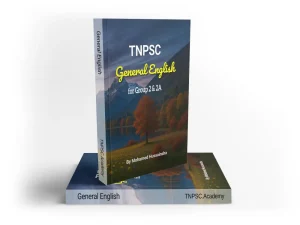
 TNPSC General English Book - for Group 2 & 2A
Original price was: ₹1,000.00.₹850.00Current price is: ₹850.00.
-
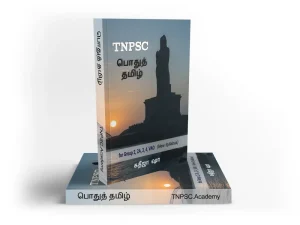
TNPSC பொதுத் தமிழ் Book - for Group 2, 2A, 3, 4 & VAO
Original price was: ₹1,000.00.₹850.00Current price is: ₹850.00.
Group 1 Courses

TNPSC Group 1 - Test Series - 2019
Original price was: ₹3,500.00.₹2,800.00Current price is: ₹2,800.00. 542
Class Tests
PRIVATE 67Group 1 | Postal and Online Test Series | 2022
Original price was: ₹3,200.00.₹2,800.00Current price is: ₹2,800.00. 88






Group 2 & 2A Courses
TNPSC Group 2 and 2A - Test Series - 2019 - தமிழ்
Original price was: ₹2,400.00.₹1,800.00Current price is: ₹1,800.00. 175TNPSC Group 2 and 2A MAINS - 2022
PRIVATE 344Class Tests
PRIVATE 67TNPSC Group 2 and 2A - Test Series - 2019
Original price was: ₹2,400.00.₹1,800.00Current price is: ₹1,800.00. 527






www.tnpsc.academy – TNPSC Current Affairs March 02, 2020 (02/03/2020)
Download as PDF
Topic: Latest Diary of Events
Rare Disease Day
Rare Disease Day is observed on February 29.
What is a rare disease?
A rare disease, also referred to as an orphan disease, is any disease that affects a small percentage of the population.
Most rare diseases are genetic, and are present throughout a person’s entire life, even if symptoms do not immediately appear.
The most common rare diseases recorded in India are Haemophilia, Thalassemia, sickle-cell anaemia and primary immuno deficiency in children, auto-immune diseases, Lysosomal storage disorders such as Pompe disease, Hirschsprung disease, Gaucher’s disease, Cystic Fibrosis, Hemangiomas and certain forms of muscular dystrophies.
_
Topic: Latest Inventions on Science and Technology
RaIDer-X
The Defence Research and Development Organisation (DRDO) and the Indian Institute of Science in Bangalore have developed a new bomb detection device called Raider-X.
What is RaIDer-X?
It is an explosives detection device. It can detect up to 20 explosives from a stand-off distance of two meters. Developed by the High Energy Material Research Laboratory (HEMRL) — an arm of the DRDO — in Pune and the Indian Institute of Science in Bangalore. It can also discern bulk explosives even if they have been concealed.
Applications:
The device has various applications including narcotics, for local police, for customs and other detection agencies who need to detect various elements which may be explosive or non-explosive in nature.
_
Topic: International Diary of Events
Scotland’s proposed law to make sanitary products free for all
The Scottish Parliament recently passed the Period Products (Free Provision) (Scotland) Bill that aims to make sanitary products free for women of all age groups.
When passed, Scotland may become the first country in the world to end ‘period poverty’.
What is ‘period poverty’?
‘Period poverty Scotland’ website mentions some circumstances that make menstruation a “difficult experience” for women. These include homelessness, coercive, controlling and violent relationships and health conditions such as endometriosis. “Some trans people may also experience difficulties in accessing sanitary products”.
_
Topic: Public Awareness and General Administration, Latest inventions on Science and Health
WHO raises global risk of coronavirus to ‘very high’, what does this mean?
WHO characterises risk of spread and impact of a disease on a scale that ranges from “low risk” to “very high” level of risk.
It defines the different characterisations of risk as follows:
Low Risk: “Managed according to standard response protocols, routine control programmes and regulation (e.g. monitoring through routine surveillance systems)”.
Moderate Risk: “Roles and responsibility for the response must be specified. Specific monitoring or control measures required (e.g. enhanced surveillance, additional vaccination campaigns)”.
High Risk: “Senior management attention needed: there may be a need to establish command and control structures; a range of additional control measures will be required some of which may have significant consequences”.
Very High Risk: “Immediate response required even if the event is reported out of normal working hours. Immediate senior management attention needed (e.g. the command and control structure should be established within hours); the implementation of control measures with serious consequences is highly likely”.
_
Topic: Profile of States, Latest Diary of Event
Ekam Fest
Exhibition-cum-Fair “EKAM Fest” is being organised by National Handicapped Finance Development Corporation (NHFDC) under M/o Social Justice & Empowerment. Aims to promote craftsmanship & products of divyang (physically-challenged) artisans and entrepreneurs.
_
Topic: Latest Diary of Events
Eurasian Otter
IUCN Red List: Near Threatened
Protection: CITES: Appendix I, Indian Wildlife Protection Act, 1972: Schedule II.
Habitat: Found throughout Europe and in Asia. In India, the species is distributed in the Himalayan foothills, southern Western Ghats and the central Indian landscape.
Why in News? Spotted in Chilika lake.
_
Topic: International Events, India’s Foreign Policy
India’s 40 million USD defence deal with Armenia beats Russia and Poland
India bagged a deal to supply 4 indigenously built radars (capable of locating weapons) to Armenia. The deal was worth 40 million USD.
Key facts: India and Armenia signed deals on DRDO built “Swati” weapon locating radars. Armenia has decided to go with Indian built radars after testing Russian and Poland made systems. Armenia also claims that Indian made systems were more reliable as compared to the other two.
Swati Radar: The Radar is capable of handling multiple weapons at different locations. Currently, Indian army is also using the same radar along the line of control to trace source of attack of the Pakistan army.
_
Topic: Latest Diary of Events
Red Panda Species are two separate species
The Chinese Academy of Sciences have discovered that the red panda species are actually two separate species.
Earlier, both the Himalayan red pandas and the Chinese red Pandas were together considered as red panda species. However, the DNA analysis says that they are two separate species.
Habitats:
Chinese Red Panda are found in northern Myanmar, Sichuan, south-eastern Tibet and Yunnan province of China. The Himalayan red Pandas are found in India, Nepal, Bhutan and southern Tibet. On the whole, there are 10,000 red pandas in the wild.
Key facts:
The Yalu Zangbu river marks the geographical boundary between the two species. The two species differ in face. The Himalayan Red Panda has more white spots in its face and Chinese red panda is redder with less white on it. The tail rings of the Chinese Red Panda is darker and paler as compared to the Himalayan Red Panda.