
TNPSC Books
-
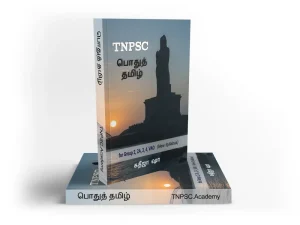
 TNPSC பொதுத் தமிழ் Book - for Group 2, 2A, 3, 4 & VAO
Original price was: ₹1,000.00.₹850.00Current price is: ₹850.00.
-
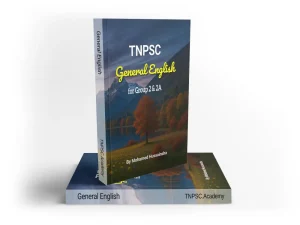
TNPSC General English Book - for Group 2 & 2A
Original price was: ₹1,000.00.₹850.00Current price is: ₹850.00.
Group 1 Courses

Class Tests
PRIVATE 67Group 1 | Postal and Online Test Series | 2022
Original price was: ₹3,200.00.₹2,800.00Current price is: ₹2,800.00. 88
TNPSC Group 1 - Test Series - 2019
Original price was: ₹3,500.00.₹2,800.00Current price is: ₹2,800.00. 542




Group 2 & 2A Courses
TNPSC Group 2 and 2A - Test Series - 2019
Original price was: ₹2,400.00.₹1,800.00Current price is: ₹1,800.00. 527TNPSC Group 2 and 2A MAINS - 2022
PRIVATE 344TNPSC Group 2 and 2A - Test Series - 2019 - தமிழ்
Original price was: ₹2,400.00.₹1,800.00Current price is: ₹1,800.00. 175Class Tests
PRIVATE 67





www.tnpsc.academy – TNPSC Current Affairs July 30, 2020 (30/07/2020)
Download as PDF
Topic: Public Awareness and General Administration
New Education Policy
First new education policy in 34 years has been brought out. The union Cabinet gave its nod to the new policy recently.
The aim of the National Education Policy 2020 is to create an education system which is deeply rooted in Indian ethos and can rebuild India as a global knowledge superpower, by providing high-quality education to all.
Background:
A panel headed by former ISRO chief K. Kasturirangan submitted a draft in December 2018, which was made public and opened for feedback after the Lok Sabha election in May 2019.
Highlights of the policy:
Public spending on education by states, Centre to be raised to 6% of the GDP. Ministry of Human Resource Development to be renamed Minister of Education.
Digital Education- related:
An autonomous body, the national educational technology forum, will be created for the exchange of ideas on use of technology to enhance learning, assessment, planning and administration.
Separate technology unit to develop digital education resources. The new unit will coordinate digital infrastructure, content and capacity building.
Teacher Education- related:
By 2030, the minimum degree qualification for teaching will be a four year integrated B.Ed.
Teachers will also be given training in online educational methods relevant to the Indian situation in order to help bridge the digital divide.
School Education- related:
Universalise the pre-primary education (age range of 3-6 years) by 2025.
Universalization of Education from pre-school to secondary level with 100% Gross Enrolment Ratio (GER) in school education by 2030.
A new school curriculum with coding and vocational studies from class 6 will be introduced.
A child’s mother tongue will be used as the medium of instruction till class 5.
A new curricular framework is to be introduced, including the preschool and Anganwadi years.
A National Mission on Foundational Literacy and Numeracy will ensure basic skills at the class 3 level by 2025.
Board exams to be easier, redesigned. Exams will test core competencies rather than memorising facts, with all students allowed to take the exam twice.
School governance is set to change, with a new accreditation framework and an independent authority to regulate both public and private schools.
Higher Education- related:
Four year undergraduate degrees with multiple entry and exit options will be introduced.
The Phil degree will be abolished.
New umbrella regulator for all higher education except medical, legal courses.
An Academic Bank of Credit will be set up to make it easier to transfer between institutions.
College affiliation system to be phased out in 15 years, so that every college develops into either an autonomous degree-granting institution, or a constituent college of a university.
It also aims to double the Gross Enrolment Ratio in higher education, including vocational education, from 26.3% in 2018 to 50% by 2035, with an additional 3.5 crore new seats.
Traditional knowledge- related:
Indian knowledge systems, including tribal and indigenous knowledge, will be incorporated into the curriculum in an accurate and scientific manner.
Special focus:
Regions such as aspirational districts, which have large number of students facing economic, social or caste barriers will be designated as ‘Special Educational Zones’.
The Centre will also set up a Gender Inclusion Fund to build the country’s capacity to provide equitable quality education to all girls and transgender students.
Financial support:
Meritorious students belonging to SC, ST, OBC and other socially and economically disadvantaged groups will be given incentives.
New Curricular and Pedagogical Structure:
The NEP proposes changing the existing 10+2 Curricular and Pedagogical Structure with 5+3+3+4 design covering the children in the age group 3-18 years. Under this —
Five years of the Foundational Stage: 3 years of pre-primary school and Grades 1, 2;
Three years of the Preparatory (or Latter Primary) Stage: Grades 3, 4, 5;
Three years of the Middle (or Upper Primary) Stage: Grades 6, 7, 8;
Four years of the High (or Secondary) Stage: Grades 9, 10, 11, 12.
Challenges ahead:
Since education is a concurrent subject most states have their own school boards. Therefore, state governments would have to be brought on board for actual implementation of this decision.
_
Topic: Current Socio-Economic Issues
Protesting is a Fundamental Right: UN
Recently, the United Nations (UN) Human Rights Committee has reaffirmed that protesting peacefully, online or in person, is a fundamental human right.
This statement has come in the backdrop of increasing demonstrations over issues like political rights and racial justice.
Key Facts:
UN Human Rights Committee: It is tasked with monitoring how countries implement the International Covenant on Civil and Political Rights (ICCPR) 1976, which under Article 21 guarantees the right to peaceful assembly.
Indian Scenario:
India is a state party to the International Covenant on Civil and Political Rights (ICCPR).
The right to protest, to publicly question and force the government to answer, is a fundamental political right of the people that flows directly from a democratic reading of Article 19 of the Constitution of India.
Article 19 (1) (a) states that all citizens shall have the right to freedom of speech and expression.
Article 19 (1) (b) states that all citizens shall have the right to assemble peaceably and without arms.
However, the State can impose reasonable restrictions on the exercise of right of assembly on two grounds, namely, sovereignty and integrity of India and public order including the maintenance of traffic in the area concerned.
_
Topic: Profile of States, Latest Diary of Events
Natesa: Pratihara Style of Rajasthan
Natesa, a rare sandstone idol from the 9th century (Pratihara Style of Rajasthan) has been retrieved after 22 years by Rajasthan police.
Key Facts:
The Natesa icon, currently at the Indian High Commission, London, was originally from the Ghateswar Temple, Baroli, Rajasthan. It was smuggled out of the country in 1998.
A few archaeologists behind the ‘India Pride Project’ have also taken consistent efforts for the restitution of the Natesa icon.
Pratihara Style:
It is a famous temple architecture belonging to the Gurjara-Pratihara dynasty of Rajasthan. They ruled much of Northern India from the mid-8th to the 11th century.
The architecture is known for their sculptures, carved panels and open pavilion style temples belonging to Nagara Style of temple Architecture.
They used most common sandstones for idols that have various shades of red, caused by iron oxide (rust).
The greatest development of their style of building is at Khajuraho, Madhya Pradesh, now a UNESCO World Heritage Site.
_
Topic: Latest inventions on Science and Technology
Aerial Seeding in Haryana
Recently, the Haryana government has employed aerial seeding techniques to improve green cover in the Aravalli area of the state.
The project is being carried out on a pilot basis to regenerate the low vegetation density or denuded areas on inaccessible or difficult sites of Aravalli and Shivalik hills.
Aerial Seeding:
Aerial Seeding is a plantation technique wherein seed balls — seeds covered with a mixture of clay, compost, char and other components — are sprayed using aerial devices, including planes, helicopters or drones.
Advantages:
Areas that are inaccessible, having steep slopes or no forest routes, can be targeted using this method.
The process of the seed’s germination and growth is such that it requires no attention after it is dispersed and thus seed pellets are known as the “fire and forget” way of plantation.
They eliminate any need for ploughing and do not need to be planted since they are already surrounded by soil, nutrients, and microorganisms. The clay shell also protects them from birds, ants and rats.
_
Topic: International Events
Turkey approves social media law
Turkey’s parliament has approved a new social media law that gives authorities greater power to regulate social media despite concerns of growing censorship.
Key Facts:
The law requires major social media companies such as Facebook and Twitter to keep representative offices in Turkey to deal with complaints against content on their platforms.
If a social media company refuses to designate an official representative, the legislation mandates steep fines, advertising bans and bandwidth reductions.
Concerns:
The new law is being called the “censorship law.” It is because the law would further limit freedom of expression in a country where the media is already under tight government control and dozens of journalists are in jail.
The law would be used to remove content critical of the government rather than to protect users. This is a clear violation of the right to freedom of expression online and contravenes international human rights law and standards.
_
Topic: International Events
Indians largest diaspora to get Australian citizenship in 2019-20
More than 38,000 Indians became Australian citizens in 2019-2020, a 60 per cent increase from the previous year and the largest diaspora group to be granted the country’s citizenship.
Key facts:
Out of the over 200,000 people who became Australian citizens in 2019-2020, 38,209 were Indians, the highest number on record, followed by 25,011 Britishers, 14,764 Chinese and 8821 Pakistanis.