
TNPSC Books
-
 TNPSC பொதுத் தமிழ் Book - for Group 2, 2A, 3, 4 & VAO
Original price was: ₹1,000.00.₹850.00Current price is: ₹850.00.
-
TNPSC General English Book - for Group 2 & 2A
Original price was: ₹1,000.00.₹850.00Current price is: ₹850.00.
Group 1 Courses

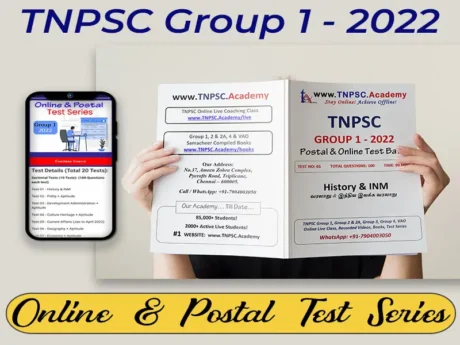
Group 1 | Postal and Online Test Series | 2022
Original price was: ₹3,200.00.₹2,800.00Current price is: ₹2,800.00. 88
TNPSC Group 1 - Test Series - 2019
Original price was: ₹3,500.00.₹2,800.00Current price is: ₹2,800.00. 542Class Tests
PRIVATE 67





Group 2 & 2A Courses
Class Tests
PRIVATE 67TNPSC Group 2 and 2A - Test Series - 2019
Original price was: ₹2,400.00.₹1,800.00Current price is: ₹1,800.00. 527TNPSC Group 2 and 2A MAINS - 2022
PRIVATE 344TNPSC Group 2 and 2A - Test Series - 2019 - தமிழ்
Original price was: ₹2,400.00.₹1,800.00Current price is: ₹1,800.00. 175






www.tnpsc.academy – TNPSC Current Affairs July 29, 2020 (29/07/2020)
Download as PDF
Topic: India and its Foreign Relations
New Supreme Court Building of Mauritius
The Prime Minister of India and the Prime Minister of Mauritius will jointly inaugurate the new Supreme Court building of Mauritius on 30th July, 2020.
It will be the first India assisted infrastructure project within the capital city of Port Louis, Mauritius.
Key Facts:
The new Supreme Court Building is expected to become an important landmark in the city center symbolizing the strong bilateral partnership between the two countries.
It is one of the five projects being implemented under the ‘Special Economic Package’ of 353 million USD extended by the Government of India to Mauritius in 2016.
_
Topic: International Events
Hong Kong’s Extradition Treaties Suspended
Recently, China has announced the suspension of Hong Kong’s extradition treaties and criminal justice cooperation agreements with Australia, Britain and Canada.
Australia, Britain and Canada along with New Zealand and the USA are part of the Five Eyes (FVEY), which is an intelligence-sharing alliance between these five countries.
New Zealand has already suspended its extradition treaty with Hong Kong, and the USA is preparing to do the same.
Extradition:
It is the formal process of one state surrendering an individual to another state for prosecution or punishment for crimes committed in the requesting country’s jurisdiction.
It is generally enabled through a bilateral or multilateral treaty. The Extradition Act of 1962 provides India’s legislative basis for extradition.
Background:
This move comes after these three countries first suspended the treaties after China imposed new security law on Hong Kong.
These western nations see the law imposed on Hong Kong as an erosion of the civil liberties and human rights it had enjoyed since its handover from Britain in 1997.
China’s Stand:
China has accused these countries of interfering in its internal affairs and defended the security law as crucial to restore order in Hong Kong.
It held that these three countries chose the wrong path of politicising judicial cooperation with Hong Kong, and it has seriously hurt the basis of judicial cooperation.
They used the national security law as an excuse to announce the suspension of extradition treaties unilaterally.
_
Topic: Latest Diary of Events
World Hepatitis Day
World Hepatitis Day is observed each year on 28th July to enhance awareness of viral hepatitis.
The theme for the year 2020 is “Hepatitis-free future”, with a strong focus on preventing hepatitis B among mothers and newborns.
Indian Scenario:
40 million people are chronically infected with Hepatitis B virus and 6 to 12 million with Hepatitis C virus.
In 2018, the government launched the National Viral Hepatitis Program. The program is the largest program for Hepatitis B and C diagnosis and treatment in the world.
_
Topic: India and its Foreign Relations
Russia, India and China (RIC) grouping
Amid the tensions on the Line of Actual Control, the dominant calls were for a more decisive westward shift in India’s foreign policy.
However, last month, India decided to attend a (virtual) meeting of the Foreign Ministers of Russia, India and China (RIC). This meeting seemed incongruous in this setting.
What is RIC?
Conceived by the then Russian foreign minister Yevgeny Primakov in 1998.
The group was founded on the basis of “ending its subservient foreign policy guided by the U.S.,” and “renewing old ties with India and fostering the newly discovered friendship with China.”
Significance and potential of the grouping:
Together, the RIC countries occupy over 19 percent of the global landmass and contribute to over 33 percent of global GDP.
All three are nuclear powers and two, Russia and China, are permanent members of the UN Security Council, while India aspires to be one.
The trio could also contribute to creating a new economic structure for the world.
They could work together on disaster relief and humanitarian assistance.
Present situation:
A lot has changed in recent times;
India’s relations with the U.S. surged, encompassing trade and investment, a landmark civil nuclear deal and a burgeoning defence relationship that met India’s objective of diversifying military acquisitions away from a near-total dependence on Russia.
China went back on the 2005 agreement, launched the China-Pakistan Economic Corridor, worked to undermine India’s influence in its neighbourhood and expanded its military and economic presence in the Indian Ocean.
As U.S.-Russia relations imploded in 2014 (after the annexation/accession of Crimea), Russia’s pushback against the U.S. included cultivating the Taliban in Afghanistan and enlisting Pakistan’s support for it.
Importance of RIC for India:
RIC still has significance.
India is in the Shanghai Cooperation Organization (SCO), which is driven by Russia and China and includes four Central Asian countries.
Central Asia is strategically located, bordering our turbulent neighbourhood.
A sliver of land separates Tajikistan from Pakistan-occupied Kashmir. Pakistan’s membership of SCO and the potential admission of Iran and Afghanistan (as member states) heighten the significance of the SCO for India.
Conclusion:
The current India-China stand-off has intensified calls for India to fast-track partnership with the U.S. This is an unexceptionable objective, but is not a silver bullet. National security cannot be fully outsourced.
India’s quest for autonomy of action is based on its geographical realities, historical legacies and global ambitions — not a residual Cold War mindset.
_
Topic: Latest inventions on Science and Technology
High levels of ammonia in Yamuna water
High levels of ammonia (3 ppm) were recently detected in the Yamuna river. Because of this, the Delhi Jal Board (DJB) had to reduce water production capacityby 25 per cent.
What is the acceptable limit?
The acceptable maximum limit of ammonia in drinking water, as per the Bureau of Indian Standards, is 0.5 ppm.
What is ammonia and what are its effects?
Ammonia is a colourless gas and is used as an industrial chemical in the production of fertilisers, plastics, synthetic fibres, dyes and other products. It consists of hydrogen and nitrogen. In its aqueous form, it is called ammonium hydroxide.
This inorganic compound has a pungent smell.
Occurrence: Ammonia occurs naturally in the environment from the breakdown of organic waste matter. It is lighter than air.
Contamination:
It may find its way to ground and surface water sources through industrial effluents or through contamination by sewage. If the concentration of ammonia in water is above 1 ppm it is toxic to fishes.
In humans, long term ingestion of water having ammonia levels of 1 ppm or above may cause damage to internal organs.
How does it enter the Yamuna?
The most likely source is believed to be effluents from dye units, distilleries and other factories in Panipat and Sonepat districts in Haryana, and also sewage from some unsewered colonies in this stretch of the river.
_
Topic: Profile of States
Green – Ag Project
The Union government on July 28, 2020, launched the Green-Ag Project in Mizoram, to reduce emissions from agriculture and ensure sustainable agricultural practices.
Mizoram is one of the five states where the project will be implemented. Other states include Rajasthan, Madhya Pradesh, Odisha and Uttarakhand.
About the Project:
The Green-Ag Project is funded by the Global Environment Facility, while the Department of Agriculture, Cooperation, and Farmers’ Welfare (DAC&FW) is the national executing agency.
Other key players involved in its implementation are Food and Agricultre Organization (FAO) and the Union Ministry of Environment, Forest and Climate Change (MoEF&CC).
The project seeks to integrate biodiversity, climate change and sustainable land management objectives and practices into Indian agriculture.
_
Topic: Latest Diary of Events
Global Tiger Day July 29
Observed on 29 July. It was created in 2010 at the Saint Petersburg Tiger Summit.
On this occasion, the Union Environment Ministry has released an updated report on India’s Tiger Survey from 2018.
Key facts:
Country’s tiger population: 2,967 — unchanged from the government’s estimate last year. India has nearly 70% of the world’s tigers.
The fourth cycle of the All India Tiger Estimation 2018 recently entered the Guinness World Record for being the world’s largest camera trap wildlife survey.
_
Topic: India and its Foreign Relations
Rafale fighter jets
Five Rafale jets arrived in India. These are part of the 36 twin-engine aircraft purchased from Dassault Rafale at approximately Rs 59,000 crore in 2016.
The Rafales are India’s first major acquisition of fighter planes in 23 years after the Sukhoi jets were imported from Russia.
All the 36 jets will be delivered to India by the end of 2021.
What is the Rafale Jet?
It is a twin-engine fighter jet manufactured by Dassault Aviation of France.
India is the fourth country to have the strategic platform with Rafale after France, Egypt and Qatar.