
TNPSC Books
-
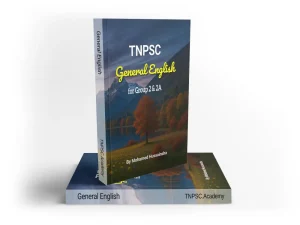 TNPSC General English Book - for Group 2 & 2A
Original price was: ₹1,000.00.₹850.00Current price is: ₹850.00.
-
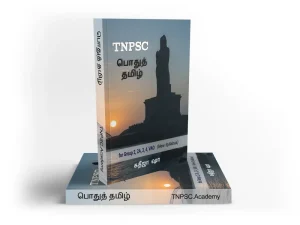 TNPSC பொதுத் தமிழ் Book - for Group 2, 2A, 3, 4 & VAO
Original price was: ₹1,000.00.₹850.00Current price is: ₹850.00.
Group 1 Courses

TNPSC Group 1 - Test Series - 2019
Original price was: ₹3,500.00.₹2,800.00Current price is: ₹2,800.00. 542
Class Tests
PRIVATE 67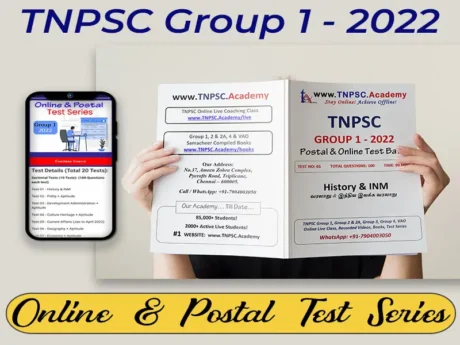
Group 1 | Postal and Online Test Series | 2022
Original price was: ₹3,200.00.₹2,800.00Current price is: ₹2,800.00. 88


Group 2 & 2A Courses

TNPSC Group 2 and 2A - Test Series - 2019 - தமிழ்
Original price was: ₹2,400.00.₹1,800.00Current price is: ₹1,800.00. 175
TNPSC Group 2 and 2A - Test Series - 2019
Original price was: ₹2,400.00.₹1,800.00Current price is: ₹1,800.00. 527Class Tests
PRIVATE 67
TNPSC Group 2 and 2A MAINS - 2022
PRIVATE 344




www.tnpsc.academy – TNPSC Current Affairs Dec 28, 2019 (28/12/2019)
Download as PDF
Topic: Historical Diary of Events, Places in News
South India’s earliest Sanskrit Inscription found in AP
The Archaeological Survey of India (ASI) has discovered the earliest Sanskrit inscription in South India. This is also an earliest epigraphic evidence (Epigraphy is the study of ancient inscriptions) for the Saptamatrika cult. The discovery was made in Chebrolu village in Guntur district of Andhra Pradesh.
About the inscriptions found:
It is in Sanskrit and in Brahmi characters. It was issued by Satavahana king Vijaya in 207 A.D.
The inscription records construction of a prasada (temple), a mandapa (a pavilion for public rituals) and consecration of images on southern side of temple by a person named Kartika for merit of king at temple of Bhagavathi (Goddess) Saktimatruka (Saptamatrika) at Tambrape (which is the ancient name of Chebrolou).
Chebrolu inscription of Satavahana king Vijaya issued in his 5th regnal year (207 A.D.) is also the earliest datable Sanskrit inscription from South India so far. Until now the Nagarjunakonda inscription of Ikshavaku king Ehavala Chantamula issued in his 11th regnal year (4th century A.D.) was considered the earliest Sanskrit inscription in South India.
The place also yielded another inscription which is in Prakrit language and of Brahmi characters and belongs to 1st century A.D.
This is thus the earliest epigraphic reference to Mutts and records gift of a cloister mandapa and chaitya to bhavatho (Lord) of the Gadasa Mutt by a person hailing from Tabaava.
Who are Saptamatrikas?
They are a group of seven female deities worshipped in Hinduism as personifying the energy of their respective consorts.
Satavahanas: They are an ancient Indian dynasty based in the Deccan. They established their independent rule after the decline of the Mauryas. Their rule lasted for about 450 years. They were also known as the Andhras.
_
Topic: Public Awareness and General Administration, Latest Diary of Events
Illegal cultivation of Bt brinjal
Illegal Bt brinjal cultivation in Haryana have been confirmed recently. India banned Bt brinjal in 2010.
Need of the hour- the GEAC should:
Visit the farms and conduct tests. Identify the source of seeds. Destroy GM crops. Compensate losses incurred by farmers. Penalise distributing companies. Form a mechanism to avoid such incidents in the future.
What is a GM crop?
A GM or transgenic crop is a plant that has a novel combination of genetic material obtained through the use of modern biotechnology.
For example, a GM crop can contain a gene(s) that has been artificially inserted instead of the plant acquiring it through pollination.
The resulting plant is said to be “genetically modified” although in reality all crops have been “genetically modified” from their original wild state by domestication, selection, and controlled breeding over long periods of time.
Do we need GM crops?
Yes and why? Higher crop yields. Reduced farm costs. Increased farm profit. Improvement in health and the environment.
No and why?
Lack of clarity: The scientific community seems uncertain about the GM technology. While there are many in this community who feel that the benefits outweigh the risks, others point to the irreversibility of this technology and uncontrollability of the Genetically Modified Organisms (GMO) once introduced in the ecosystem.
Threat to domestic crops: Globally, there is a clear view that GM crops must not be introduced in centres of origin and diversity. India also has mega biodiversity hotspots like the Eastern Himalayas and the Western Ghats which are rich in biodiversity yet ecologically very sensitive.
What_Is_Bt-Brinjal
There is also a potential for pests to evolve resistance to the toxins produced by GM crops and the risk of these toxins affecting nontarget organisms. There is also the danger of unintentionally introducing allergens and other anti-nutrition factors in foods.
_
Topic: Historical Diary of Events
National Anthem
On December 27, 1911, the National Anthem was first sung at the Calcutta session of the Congress.
Key facts:
‘Jana Gana Mana’ was adopted as the country’s National Anthem by the Constituent Assembly of India on January 24, 1950, the last day of its last session.
Reverence to the National Anthem is a Fundamental duty as per Article 51A (a) of the Constitution.
Originally written in Bengali, it is the first of five stanzas of a poem written and later set to notations by Rabindranath Tagore.