
TNPSC Books
-
 TNPSC General English Book - for Group 2 & 2A
Original price was: ₹1,000.00.₹850.00Current price is: ₹850.00.
-
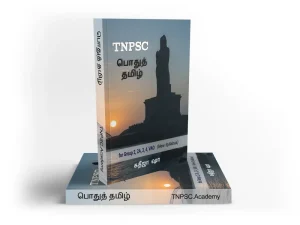
TNPSC பொதுத் தமிழ் Book - for Group 2, 2A, 3, 4 & VAO
Original price was: ₹1,000.00.₹850.00Current price is: ₹850.00.

Group 1 Courses

Class Tests
PRIVATE 67Group 1 | Postal and Online Test Series | 2022
Original price was: ₹3,200.00.₹2,800.00Current price is: ₹2,800.00. 88
TNPSC Group 1 - Test Series - 2019
Original price was: ₹3,500.00.₹2,800.00Current price is: ₹2,800.00. 542






Group 2 & 2A Courses
TNPSC Group 2 and 2A MAINS - 2022
PRIVATE 344TNPSC Group 2 and 2A - Test Series - 2019 - தமிழ்
Original price was: ₹2,400.00.₹1,800.00Current price is: ₹1,800.00. 175TNPSC Group 2 and 2A - Test Series - 2019
Original price was: ₹2,400.00.₹1,800.00Current price is: ₹1,800.00. 527Class Tests
PRIVATE 67






www.tnpsc.academy – TNPSC Current Affairs August 12, 2020 (12/08/2020)
Download as PDF (English)
Topic: International Events
Russian Covid Vaccine: Sputnik V
Recently, Russia became the first country to officially register a Covid-19 vaccine and declare it ready for use.
Key Facts:
The vaccine has been called Sputnik V, named after the first artificial Earth satellite, Sputnik-I launched by the Soviet Union. It is the first Covid-19 vaccine to be approved.
However, a Chinese vaccine had been cleared for ‘limited use’ before this. It is an adenovirus vector vaccine approved to be administered only on soldiers of the People’s Liberation Army.
India’s Covaxin has been approved for human clinical trials. Another Indian vaccine ZyCoV-D has entered phase I/II of clinical trials.
This vaccine has been developed by Moscow’s Gamaleya Institute in collaboration with the Russia’s defence ministry.
The vaccine is based on the DNA of a SARS-CoV-2 type adenovirus, a common cold virus.
The vaccine uses the weakened virus to deliver small parts of a pathogen and stimulate an immune response.
The vaccine is administered in two doses and consists of two types of a human adenovirus, each carrying an S-antigen of the new coronavirus, which enter human cells and produce an immune response.
Russian officials have said that large-scale production of the vaccine will start in September, and mass vaccination may begin as early as October.
_
Topic: Indian Political Systems, Latest Diary of Events
SC Judgement: Women have Equal Rights on Parental Property
A three-judge bench headed by Justice Arun Mishra of Supreme Court ruled that daughters have equal rights as that of sons on parental property. They shall remain coparcener throughout their life.
Key facts:
The judgement said that the daughters have equal rights in parental property as that of son. This includes in cases where the father died before the enactment of Hindu Succession (Amendment) Act, 2005. The Judgement also said that the according to Section 6 of the Hindu Succession Act, 1956, the status of coparcener on the daughter born before or after amendment in the same manner as that of the son.
Coparcener:
The term coparcener is a person who assumes legal rights in parental property by birth only. According to the judgement, a daughter is a now a coparcener as well.
Major Change:
In 2015, the Supreme Court had pronounced that the rights under the amendment of Hindu Succession Act, 1956 is applicable only to living daughters. However, in the recent judgement, the apex court pronounced that “a daughter always remains a loving daughter”.
_
Topic: Latest Diary of Events
The New tick-borne virus
This new virus is rapidly spreading in China. It causes a disease called Severe Fever with Thrombocytopenia Syndrome (SFTS).
Key facts:
While the disease is transferred to humans through tick bites, Chinese virologists have warned that human-to-human transmission of the virus cannot be ruled out.
The current case fatality rate rests between approximately 16 and 30 per cent.
Due to the rate at which it spreads and its high fatality rate, SFTS has been listed among the top 10 priority diseases blue print by the World Health Organisation (WHO).
Unlike SARS-CoV-2 however, this is not the first time the SFTS virus has infected people. The recent spate of cases merely marks a re-emergence of the disease.
What is the SFTS virus?
Severe fever with thrombocytopenia syndrome virus (SFTSV) belongs to the Bunyavirus family and is transmitted to humans through tick bites. The virus was first identified by a team of researchers in China over a decade ago.
How it spreads?
An Asian tick called Haemaphysalis longicornis is the primary vector, or carrier, of the virus. Scientists have found that the virus is often transmitted to humans from animals like goats, cattle, deer and sheep.