
TNPSC Books
-
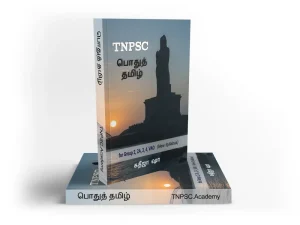
 TNPSC பொதுத் தமிழ் Book - for Group 2, 2A, 3, 4 & VAO
Original price was: ₹1,000.00.₹850.00Current price is: ₹850.00.
-
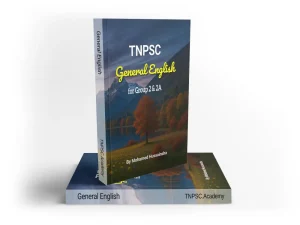
TNPSC General English Book - for Group 2 & 2A
Original price was: ₹1,000.00.₹850.00Current price is: ₹850.00.
Group 1 Courses

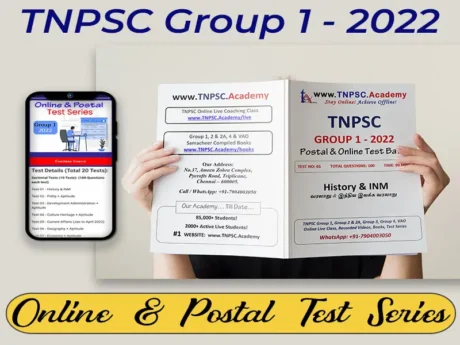
Group 1 | Postal and Online Test Series | 2022
Original price was: ₹3,200.00.₹2,800.00Current price is: ₹2,800.00. 88Class Tests
PRIVATE 67
TNPSC Group 1 - Test Series - 2019
Original price was: ₹3,500.00.₹2,800.00Current price is: ₹2,800.00. 542




Group 2 & 2A Courses
TNPSC Group 2 and 2A MAINS - 2022
PRIVATE 344TNPSC Group 2 and 2A - Test Series - 2019 - தமிழ்
Original price was: ₹2,400.00.₹1,800.00Current price is: ₹1,800.00. 175Class Tests
PRIVATE 67TNPSC Group 2 and 2A - Test Series - 2019
Original price was: ₹2,400.00.₹1,800.00Current price is: ₹1,800.00. 527




www.tnpsc.academy – TNPSC Current Affairs April 23, 2020 (23/04/2020)
Download as PDF
Topic: Latest Reports and Events, International Events
Global Report on Food Crises
A new edition of the annual Global Report on Food Crises has been released by the Global Network Against Food Crises.
The report reveals scope of food crises as COVID-19 poses new risks to vulnerable countries.
Key findings:
At the close of 2019, 135 million people across 55 countries and territories experienced acute food insecurity.
Additionally, in 2019, 183 million people were classified in Stressed condition — at the cusp of acute hunger and at risk of slipping into Crisis or worse if faced with a shock or stressor, such as the COVID-19 pandemic.
What is Acute food insecurity?
Acute food insecurity is when a person’s inability to consume adequate food puts their lives or livelihoods in immediate danger.
It is more severe than / not the same as chronic hunger, as reported on each year by the UN’s annual State of Food Security and Nutrition in the World report.
Chronic hunger is when a person is unable to consume enough food over an extended period to maintain a normal, active lifestyle.
About the Global Network against Food Crises:
It was launched by the European Union, FAO and WFP during the 2016 World Humanitarian Summit (WHS) to respond to the WHS’s call for new approaches to tackle protracted crises and recurrent disasters, reduce vulnerability, and manage risk, by bridging the divide between development and humanitarian partners.
_
Topic: Public Awareness and General Administration, Political Systems in India
No 100% quota for tribal teachers: SC
The Constitution Bench of the Supreme Court has held it unconstitutional to provide 100% reservation for tribal teachers in schools located in Scheduled Areas across the country.
What’s the issue?
The case stemmed from a legal challenge to a January 10, 2000 order issued by the erstwhile State of Andhra Pradesh Bench providing 100% reservation to the Scheduled Tribe candidates, out of whom 33.1/3% shall be women, for the post of teachers in schools located in the Scheduled Areas of the State.
What has the Court said?
100% reservation is not permissible under the Constitution as the outer limit is 50% as specified in Indra Sawhney case, 1992.
The citizens have equal rights and the total exclusion of others by creating an opportunity for one class is not contemplated by the Constitution. It also deprives SCs and OBCs of their due representation.
The opportunity of public employment cannot be denied unjustly to the incumbents and it is not the prerogative of few.
Which rights are affected?
Equality of opportunity and pursuit of choice under Article 51A cannot be deprived of unjustly and arbitrarily. It is arbitrary and violative of provisions of Articles 14 (equality before law), 15(1) (discrimination against citizens) and 16 (equal opportunity) of the Constitution.
It also impinges upon the right of open category because only STs will fill all the vacant posts leaving SCs and OBCs far behind.
_
Topic: Latest Reports and Summits
World Bank report on remittances
The World Bank has released a report on the impact of the COVID-19 on migration and remittances.
Remittances to India are likely to drop by 23 per cent from $83 billion last year to $64 billion this year due to the coronavirus pandemic, which has resulted in a global recession.
India’s neighbourhood:
In Pakistan, the projected decline is about 23 per cent, totalling about $17 billion, compared to a total of $22.5 billion last year, when remittances grew by 6.2 per cent.
In Bangladesh, remittances are projected at $14 billion this year, a likely fall of about 22 per cent.
Remittances to Nepal and Sri Lanka are expected to decline by 14 per cent and 19 per cent, respectively, this year.
India’s remittances:
India is the world’s biggest recipient of remittances. In 2019, India is estimated to have received $83.1 billion in remittances from people working overseas, about 12% of the total expected global inflow.
International remittances in 2018 (2020 report) reached $689 billion, out of which India received $78.6 billion from the 17.5 million living abroad.
_
Topic: Latest inventions on Science and Technology
Feluda and Crispr technology
What is Feluda? It is a low-cost, paper-strip test which can detect the new coronavirus within an hour.
Developed by Scientists at the Council of Scientific & Industrial Research — Institute of Genomics and Integrative Biology (CSIR-IGIB).
It is expected to cost around Rs 500 against the RT-PCR test that costs Rs 4,500 in private labs. The test is based on a bacterial immune system protein called Cas9. It uses cutting-edge gene-editing tool Crispr-Cas9 system.
What are Genes and what is gene- editing?
Genes contain the bio-information that defines any individual. Physical attributes like height, skin or hair colour, more subtle features and even behavioural traits can be attributed to information encoded in the genetic material.
An ability to alter this information gives scientists the power to control some of these features.
What is CRISPR-Cas9?
CRISPR technology is basically a gene-editing technology that can be used for the purpose of altering genetic expression or changing the genome of an organism. The technology can be used for targeting specific stretches of an entire genetic code or editing the DNA at particular locations.
Significance:
CRISPR technology is a simple yet powerful tool for editing genomes. It allows researchers to easily alter DNA sequences and modify gene function. Its many potential applications include correcting genetic defects, treating and preventing the spread of diseases and improving crops.
However, its promise also raises ethical concerns.
How it works?
CRISPR-Cas9 technology behaves like a cut-and-paste mechanism on DNA strands that contain genetic information.
The specific location of the genetic codes that need to be changed, or “edited”, is identified on the DNA strand, and then, using the Cas9 protein, which acts like a pair of scissors, that location is cut off from the strand. A DNA strand, when broken, has a natural tendency to repair itself.
Scientists intervene during this auto-repair process, supplying the desired sequence of genetic codes that binds itself with the broken DNA strand.
_
Topic: Places in News, Profile of States
Kasowal Bridge
It is a 484- metre long permanent bridge on the river Ravi to connect the Kasowal enclave of Punjab along the Pakistan border to the rest of the country. Built by the Borders Roads Organization.
Kasowal enclave is around 35 square km. It was till now connected through a pontoon bridge of limited load capacity.
The enclave was formed because it has the Ravi behind it and the International Border ahead of it.
There are similar enclaves of Pakistani territory too, which lie ahead of Ravi and face Indian territory. These Pakistani enclaves — Dera Baba Nanak enclave and Jassar enclave — were occupied by the Indian Army in the 1965 and 1971 wars.
_
Topic: International Events
Noor satellite
It is a military satellite launched recently by Iran’s Revolutionary Guard Corps — a branch of the country’s armed forces. The satellite flew into orbit on top of a multi-stage Qased rocket.
_
Topic: Latest Diary of Events
April 23: World Book Day
Every year, World Book Day or International Day of Book or World Book and Copyrights Day is organised by United Nations Educational Scientific and Cultural Organization (UNESCO).
The World Book Day is being celebrated since 1995. The idea of World Book Day was given a writer Vicente Clavel Andres to celebrate World Book Day on the death anniversary of author Miguel de Cervantes.