
TNPSC Books
-
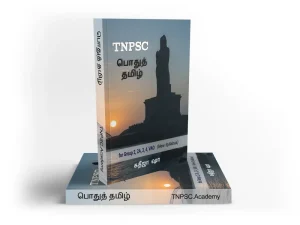
 TNPSC பொதுத் தமிழ் Book - for Group 2, 2A, 3, 4 & VAO
Original price was: ₹1,000.00.₹850.00Current price is: ₹850.00.
-
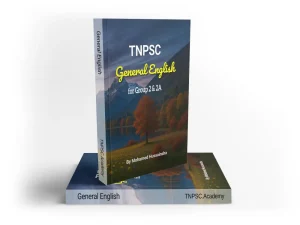
TNPSC General English Book - for Group 2 & 2A
Original price was: ₹1,000.00.₹850.00Current price is: ₹850.00.
Group 1 Courses

Class Tests
PRIVATE 67
TNPSC Group 1 - Test Series - 2019
Original price was: ₹3,500.00.₹2,800.00Current price is: ₹2,800.00. 542Group 1 | Postal and Online Test Series | 2022
Original price was: ₹3,200.00.₹2,800.00Current price is: ₹2,800.00. 88




Group 2 & 2A Courses
TNPSC Group 2 and 2A MAINS - 2022
PRIVATE 344Class Tests
PRIVATE 67TNPSC Group 2 and 2A - Test Series - 2019 - தமிழ்
Original price was: ₹2,400.00.₹1,800.00Current price is: ₹1,800.00. 175TNPSC Group 2 and 2A - Test Series - 2019
Original price was: ₹2,400.00.₹1,800.00Current price is: ₹1,800.00. 527






[vc_row][vc_column][vc_row_inner][vc_column_inner width=”1/12″][/vc_column_inner][vc_column_inner width=”5/12″][vc_column_text]
Music – The Hope Raiser
Note: Question & Answers included.
“One of my parents’ deepest fears, I suspect, is that society would not properly value me as a musician, that I wouldn’t be appreciated. I had very good grades in high school, I was good in science and math, and they imagined that as a doctor or a research chemist or an engineer, I might be more appreciated than I would be as a musician. I still remember my mother’s remark when I announced my decision to apply to music school. She said, “you’re wasting your SAT scores!” On some level, I think, my parents were not sure what the value of music was, what its purpose was. And they loved music: they listened to classical music all the time. They just weren’t really clear about its function. So let me talk about that a little bit, because we live in a society that puts music in the “arts and entertainment” section of the newspaper. Serious music, the kind your kids are about to engage in, has absolutely nothing whatsoever to do with entertainment, in fact it’s the opposite of entertainment. Let me talk a little bit about music, and how it works.
One of the first cultures to articulate how music really works was that of the ancient Greeks. And this is going to fascinate you: the Greeks said that music and astronomy were two sides of the same coin. Astronomy was seen as the study of relationships between observable, permanent, external objects, and music was seen as the study of relationships between invisible, internal, hidden objects.
Music has a way of finding the big, invisible moving pieces inside our hearts and souls and helping us figure out the position of things inside us. Let me give you some examples of how this works. One of the most profound musical compositions of all time is the “Quartet for the End of Time” written by a French composer Olivier Messiaen in 1940. Messiaen was 31 years old when France entered the war against Nazi Germany. He was captured by the Germans in June of 1940 and imprisoned in a prisoner-of-war camp.
He was fortunate to find a sympathetic prison guard who gave him paper and a place to compose, and was fortunate to have musician colleagues in the camp, a cellist, a violinist, and a clarinetist. Messiaen wrote his quartet with these specific players in mind. It was performed in January 1941 for four thousand prisoners and guards in the prison camp. Today it is one of the most famous masterworks in the Repertoire.
Given what we have since learned about life in the Nazi camps, why would anyone in his right mind waste time and energy writing or playing music? There was barely enough energy on a good day to find food and water, to avoid a beating, to stay warm, to escape torture-why would anyone bother with music? And yet-even from the concentration camps, we have poetry, we have music, we have visual art; it wasn’t just this one fanatic Messiaen ; many, many people created art. Why? Well, in a place where people are only focused on survival, on the bare necessities, the obvious conclusion is that art must be, somehow, essential for life. The camps were without money, without hope, without commerce, without recreation, without basic respect, but they were not without art. Art is part of survival; art is part of the human spirit, an unquenchable expression of who we are. Art is one of the ways in which we say, “I am alive, and my life has meaning.”
In September of 2001 I was a resident of Manhattan. On the morning of September 12, 2001 I reached a new understanding of my art and its relationship to the world. I sat down at the piano that morning at 1 a. m to practice as was my daily routine; I did it by force of habit, without thinking about it. I lifted the cover on the keyboard, and opened my music, and put my hands on the keys and just as soon took my hands off it. And I sat there and thought, does this even matter? Isn’t this completely irrelevant? Playing the piano right now, given what happened in this city yesterday, seems silly, absurd, irreverent, and pointless. Why am I here? What place has a musician in this moment in time? Who needs a piano player right now? I was completely lost. And then I, along with the rest of New York, went through the journey of getting through that week. I did not play the piano that day, and in fact I contemplated briefly whether I would ever want to play the piano again . And then I observed how we got through the day.
At least in my neighborhood, we didn’t shoot hoops or play Scrabble. We didn’t play cards to pass the time, we didn’t watch TV, we didn’t shop, we most certainly did not go to the mall. The first organized activity that I saw in New York, on the very evening of September 1 1th, was singing. People sang around fire houses, people sang “We Shall Overcome”. Lots of people sang “America the Beautiful”. The first organized public event that I remember was the Brahms Requiem, later that week, at Lincoln Center, with the New York Philharmonic. The first organized public expression of grief, our first communal response to that historic event, was a concert. That was the beginning of a sense that life might go on. The US Military secured the airspace, but recovery was led by the arts, and by music in particular, that very night. From these two experiences, I have come to understand that music is not part of “arts and entertainment” as the newspaper section would have us believe. It’s not a luxury, a lavish thing that we fund from leftovers of our budgets, not a plaything or an amusement or a pastime. Music is a basic need of human survival. Music is one of the ways we make sense of our lives, one of the ways in which we express feelings when we have no words, a way for us to understand things with our hearts when we can’t with our minds. Frankly, ladies and gentlemen, I expect you not only to master music; I expect you to save the planet. If there is a future wave of wellness on this planet, of harmony, of peace, of an end to war, of mutual understanding, of equality, of fairness, I don’t expect it will come from a government, a military force or a corporation. I no longer even expect it to come from the religions of the world, which together seem to have brought us as much war as they have peace.
If there is a future of peace for humankind, if there is to be an understanding of how these invisible, internal things should fit together, I expect it will come from the artists, because that’s what we do. As in the concentration camp and the evening of 9/1 1 , the artistes are the ones who might be able to help us with our internal, invisible lives.”
[/vc_column_text][/vc_column_inner][vc_column_inner width=”5/12″][vc_column_text]
Questions and Answers:
Ans: He has good grade in science and math.
Ans: A Musician
Ans: No. They loved music, they listened to classical music.
Ans: In arts and entertainment.
Ans: No.
Ans: The ancient Greeks.
Ans: Music and Astronomy
Ans: Similar in approach but different in aim.
Ans: Observable, permanent, external objects.
Ans: Invisible, internal, hidden objects.
Ans: The inside soul.
Ans: Quartet for the End of Time written by a French composer Olivier Messiaen in 1940
Ans: In Nazi camp.
Ans: In the prison camp for prisoners and guards.
Ans: Since it is composed in the most feared Nazi’s camp, it does not even has the basic essentials of life, but it had the music for the relief.
Ans: On Sep 11, 2001 the twin tower blast happened. Hence he thought no one will be pleased to listen to music the next day morning.
Ans: People sang around fire houses.
Ans: “We shall overcome ” and “America the Beautiful”
Ans: Charles Tindley’s – derived from his gospel song “I will overcome someday”
Ans: It was adopted by Guy Caravan, Cindy Caravan and a few others.
Ans: Brahms Requiem, at the Lincoln Center, with the New York Philharmonic.
Ans: The New York Philharmonic (officially the Philharmonic-Symphony Society of New York) is a symphony orchestra based in New York City in the United States.
Ans: The US Military
Ans: Art, and by Music in particular.
Ans: To save the planet.
Ans: Music will remove the hatred among people even between borders.
Ans: A government, A Military force or a corporation.
Ans: The Music
Ans: Religions of the world.
[/vc_column_text][/vc_column_inner][vc_column_inner width=”1/12″][/vc_column_inner][/vc_row_inner][/vc_column][/vc_row]