
TNPSC Books
-
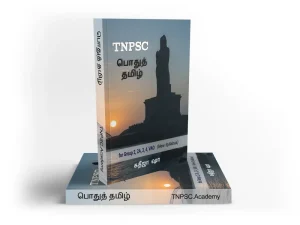
 TNPSC பொதுத் தமிழ் Book - for Group 2, 2A, 3, 4 & VAO
Original price was: ₹1,000.00.₹850.00Current price is: ₹850.00.
-
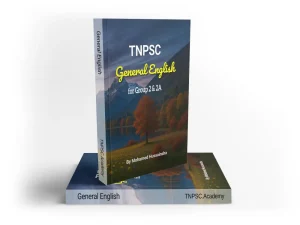
TNPSC General English Book - for Group 2 & 2A
Original price was: ₹1,000.00.₹850.00Current price is: ₹850.00.
Group 1 Courses

Class Tests
PRIVATE 67Group 1 | Postal and Online Test Series | 2022
Original price was: ₹3,200.00.₹2,800.00Current price is: ₹2,800.00. 88
TNPSC Group 1 - Test Series - 2019
Original price was: ₹3,500.00.₹2,800.00Current price is: ₹2,800.00. 542





Group 2 & 2A Courses
Class Tests
PRIVATE 67TNPSC Group 2 and 2A MAINS - 2022
PRIVATE 344TNPSC Group 2 and 2A - Test Series - 2019 - தமிழ்
Original price was: ₹2,400.00.₹1,800.00Current price is: ₹1,800.00. 175TNPSC Group 2 and 2A - Test Series - 2019
Original price was: ₹2,400.00.₹1,800.00Current price is: ₹1,800.00. 527






www.tnpsc.academy – TNPSC Current Affairs February 08, 2020 (08/02/2020)
Download as PDF
Topic: Public Awareness and General Administration, Latest Diary of Events
Genome India project
The government has cleared an ambitious gene-mapping project, called Genome India Project.
Overview of Genome India Project:
The Rs 238-crore Genome India Project will involve 20 leading institutions including the Indian Institute of Science (IISc) in Bengaluru and a few IITs.
The first stage of the project will look at samples of “10,000 persons from all over the country” to form a “grid” that will enable the development of a “reference genome”. The IISc’s Centre for Brain Research, an autonomous institute, will serve as the nodal point of the project.
_
Topic: Profile of States, Public Awareness, Latest Diary of Events
Kerala’s ban on CFL and filament bulbs from November 2020
Kerala will impose a ban on the sale of compact fluorescent lamps (CFL) and incandescent (filament) bulbs starting November this year as part of sustainable energy policy. This is in line with the government project of ‘Filament-free Kerala’ envisaged in 2018 as part of the state’s Urja Kerala mission.
What is filament-free Kerala project?
It will be implemented by the Kerala State Electricity Board (KSEB) and the Energy Management Centre. Consumers in the state can place orders for LED bulbs on the KSEB website in exchange for existing filament bulbs.
Nine-watt LED bulbs are being sold at reduced prices by the government to encourage usage. Last year, Peelikode in Kasaragod district became the first panchayat in the country to be completely filament-free.
The project is also part of the long-term sustainable energy policy to reduce the dependence on conventional energy sources and instead maximise potential on renewable sources like solar and hydel power.
Key differences between LED and CFL:
The LED bulb stands for Light Emitting Diode, and CFL stands for Compact Fluorescent Light.
LED bulbs are more energy efficient than CFLs.
The LED bulb consumes less electricity than its counterpart CFL 75% a year in energy cost.
The life of a LED bulb is usually up to 50000 hours or more while the life of a CFL bulb is up to 8000 hours.
The LED bulb is expensive than a CFL bulb.
The primary difference between them is LED bulbs are durable and long lasting as compared to the CFLs.
The size of LED bulb is usually smaller than a CFL bulb.
The LED bulb, when lighten up remains cool, whereas the CFL bulb gets heated up quickly.
_
Topic: Latest Diary of Events
India International Seafood Show held in Kochi
The Marine Products Export Development Authority Organized International Sea Food Show in Kochi. Around 5,000 delegates participated in the show. The show will provide a platform for overseas importers of Indian marine products and also for Indian exporters. The Show is being held between February 7, 2020 and February 9, 2020.
Key facts:
Around 350 stalls, 200 exhibitors and 5,000 delegates are to participate at the event. The show was previously held in Goa in January 2018. The show was organized under the theme: “Blue Revolution: Beyond Production to Value Addition”.
_
Topic: Latest Diary of Events
Sharang artillery Gun inducted into Indian Army February 8, 2020
The Sharang Artillery Gun is to be inducted into Indian Army on February 8, 2020. The artillery guns are currently produced at the Kanpur ordnance factory.
Key facts: The Sharang artillery guns have been upgraded from 130 mm to 155 mm. Also, the hitting range of the gun system has been increased from 12 kilo metres to 39 kilo metres.
It was tested at the Balasore DRDO facility in January 2019. Artillery is a heavy military ranged weapons built to launch munitions.
Background:
In October 2018, Ministry of Defence and the state-owned Ordnance Factory Board signed agreements to upgrade the artillery guns. The Sharan upgrade kit costs less than 7- lakh rupees per gun.
_
Topic: Latest Diary of Events, International Events
WHO organizes Global Research Forum on Corona Virus
The World Health Organization is to host Global Research Forum between February 11, 2020 and February 12, 2020. The event is to be co-hosted by Global Research Collaboration for Infectious Disease Preparedness.
Pangolin identified as the host of Corona Virus in China:
The most trafficked mammal of Asia, Pangolin was identified as the host of the virus by the researchers of China. According to them, the outbreak that killed around 636 people in China has started from a market in Wuhan city through Pangolin.
Key facts:
The Genome sequence of the corona virus separated from Pangolin was 99% identical to those of the virus stains obtained from infected persons in China. Earlier in 2002-03, when the SARS outbreak occurred, the virus transferred to humans from civet (a mammal).