
TNPSC Books
-
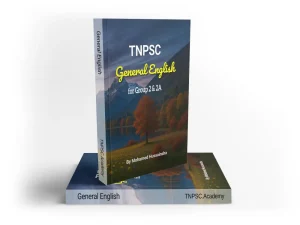
 TNPSC General English Book - for Group 2 & 2A
Original price was: ₹1,000.00.₹850.00Current price is: ₹850.00.
-
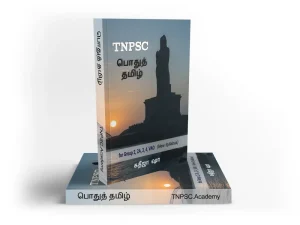
TNPSC பொதுத் தமிழ் Book - for Group 2, 2A, 3, 4 & VAO
Original price was: ₹1,000.00.₹850.00Current price is: ₹850.00.
Group 1 Courses

TNPSC Group 1 - Test Series - 2019
Original price was: ₹3,500.00.₹2,800.00Current price is: ₹2,800.00. 542
Group 1 | Postal and Online Test Series | 2022
Original price was: ₹3,200.00.₹2,800.00Current price is: ₹2,800.00. 88Class Tests
PRIVATE 67






Group 2 & 2A Courses
TNPSC Group 2 and 2A MAINS - 2022
PRIVATE 344TNPSC Group 2 and 2A - Test Series - 2019
Original price was: ₹2,400.00.₹1,800.00Current price is: ₹1,800.00. 527Class Tests
PRIVATE 67TNPSC Group 2 and 2A - Test Series - 2019 - தமிழ்
Original price was: ₹2,400.00.₹1,800.00Current price is: ₹1,800.00. 175






www.tnpsc.academy – TNPSC Current Affairs July 20, 2018 (20/07/2018)
Download as PDF
Topic: Latest Diary of Events
Nelson Mandela International Day
On 18th July 2018 remind 100 years since the birth of Nelson Mandela celebrated as the Nelson Mandela International Day.
What is Nelson Mandela International Day?
Nelson Mandela International Day is a global event held annually to honour former South African president and anti-apartheid activist Nelson Mandela.
Nelson Mandela International Day (or Mandela Day) is an annual international day in honour of Nelson Mandela, celebrated each year on 18 July, Mandela’s birthday.
The day was officially declared by the United Nations in November 2009, with the first UN Mandela Day held on 18 July 2010. However, other groups began celebrating Mandela Day on 18 July 2009.
The event started after the Nelson Mandela Foundation and 46664, a concert series that benefits AIDS victims referencing Mandela’s prison number 46664, first proposed the idea of a worldwide day honoring the work and legacy of Nelson Mandela in April 2009.
Who was Nelson Mandela?
Nelson Mandela was the former President of South Africa as well as an anti-apartheid activist, philanthropist and political leader.
Mandela emerged as a key leader in the resistance to racist apartheid laws, being arrested multiple times and later being sentenced to life in prison in 1964 after being trialed for conspiring to overthrow the government.
He was the country’s first black head of state and the first elected in a fully representative democratic election.
_
Topic: Geographical Landmarks, Latest Historical Events
Newest phase in Earth’s history named after Meghalaya rock
Scientists have created a new phase in Earth’s geological history and named it Meghalayan, after a stalagmite from a cave in the Indian state of Meghalaya that helped define climatic events 4,200 years ago, marking the beginning of the phase that continues till today.
The beginning of Meghalayan age:
The Meghalayan age begins 4,200 years BP, leaving open room for the possible creation of the Anthropocene from 1950 forward.
The age began with a 200-year drought which impacted human civilizations in Egypt, Greece, Syria, Canaan, Mesopotamia, the Indus Valley and the Yangtze River Valley.
The age was officially ratified by the International Commission on Stratigraphy in July 2018 along with the Greenlandian and the Northgrippian.
Its uniqueness:
The Meghalayan is unique because it is the first interval in Earth’s geological history that coincided with a major cultural event, as agricultural societies struggled to recover from the shift in climate.
The droughts over a 200-year period resulted in human migrations in Egypt, Greece, Syria, Palestine, Mesopotamia, the Indus valley and the Yangtze river valley.
_
Topic: Government of India, General Administration, Latest Diary of Events
No confidence motion
The Speaker of Lok Sabha, Sumitra Mahajan has admitted a no-confidence motion moved by the opposition against the ruling government.
What is a no-confidence motion?
A no-confidence motion is a parliamentary motion which is moved in the Lok Sabha against the entire council of ministers, stating that they are no longer deemed fit to hold positions of responsibility due to their inadequacy in some respect or their failure to carry out their obligations. No prior reason needs to be stated for its adoption in the Lok Sabha.
How it works?
At least 50 MPs would need to stand up and support the move. If there are 50 MPs in favour, the motion is admitted and the speaker allots a date for discussion on the motion.
The prime minister or ministers reply to the charges made. The mover has the right to reply. After the debate, the speaker puts question to the house and ascertains the decision of the house by voice vote or a division.
Implications:
The government is expected to resign if it loses a trust vote. In case its refuses to do so, the President has the power to remove the prime minister. In the history of Indian Parliament, no Prime Minister has been forcibly removed so far.
After a government loses a trust vote and resigns, it continues to function, but as a caretaker government with almost the same powers as it had before the voting.
However, a caretaker government wouldn’t have the power to take any major policy decisions since Parliament remains dissolved. A new government gets elected after the general elections.
Key facts:
The Rajya Sabha does not have a procedure for moving of an adjournment motion, censure motion or no-confidence motion against the Government.
Rule 198 of the Rules of Procedure and Conduct of Business in Lok Sabha lays down the procedure for moving a Motion of No-Confidence in the Council of Ministers.
There is no mention of a no-confidence motion in the constitution.