
TNPSC Books
-
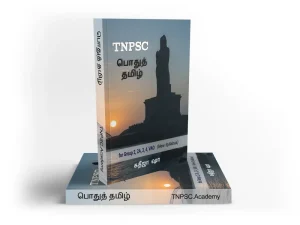
 TNPSC பொதுத் தமிழ் Book - for Group 2, 2A, 3, 4 & VAO
Original price was: ₹1,000.00.₹850.00Current price is: ₹850.00.
-
TNPSC General English Book - for Group 2 & 2A
Original price was: ₹1,000.00.₹850.00Current price is: ₹850.00.

Group 1 Courses

Class Tests
PRIVATE 67Group 1 | Postal and Online Test Series | 2022
Original price was: ₹3,200.00.₹2,800.00Current price is: ₹2,800.00. 88
TNPSC Group 1 - Test Series - 2019
Original price was: ₹3,500.00.₹2,800.00Current price is: ₹2,800.00. 542






Group 2 & 2A Courses
TNPSC Group 2 and 2A MAINS - 2022
PRIVATE 344TNPSC Group 2 and 2A - Test Series - 2019 - தமிழ்
Original price was: ₹2,400.00.₹1,800.00Current price is: ₹1,800.00. 175TNPSC Group 2 and 2A - Test Series - 2019
Original price was: ₹2,400.00.₹1,800.00Current price is: ₹1,800.00. 527Class Tests
PRIVATE 67





www.tnpsc.academy – TNPSC Current Affairs October 20, 2020 (20/10/2020)
Download as PDF in English
Topic: India and its Foreign Relations
Australia to Join Malabar Exercise
Recently, Australia has agreed to join the Malabar Exercise on India’s request. The exercise is scheduled to be held in November 2020.
2020 Malabar Exercise:
The 2020 Exercise is expected to be held in the Bay of Bengal and the Arabian Sea. In 2019, the exercise was conducted off the coast of Japan. Due to Covid-19 pandemic the exercise had been planned in a ‘non-contact – at sea’ format. Its objective is to enhance safety and security in the maritime domain.
_
Topic: Welfare Oriented Schemes and their Utilities
Ayushman Sahakar Scheme
The Ministry of Agriculture and Farmers Welfare has launched Ayushman Sahakar, a scheme to assist cooperatives in creation of healthcare infrastructure in the country.
Key facts:
It is formulated by National Cooperative Development Corporation (NCDC). NCDC was set up under an Act of Parliament in 1963 for promotion and development of cooperatives. It functions under the Ministry of Agriculture and Farmers Welfare.
Features:
NCDC would extend term loans to prospective cooperatives to the tune of Rs. 10,000 crore in the coming years. Any Cooperative Society with suitable provision in its byelaws to undertake healthcare related activities would be able to access the NCDC fund.
The scheme covers establishment, modernization, expansion, repairs, renovation of hospital and healthcare and education infrastructure. NCDC assistance will flow either through the State Governments/ UT Administrations or directly to the eligible cooperatives.
The scheme also provides working capital and margin money to meet operational requirements. Further, the scheme provides interest subvention of 1% to women majority cooperatives.
_
Topic: Latest inventions on Science and Technology
Heeng Cultivation Project in India
Scientists at CSIR-Institute of Himalayan Bioresource Technology (IHBT), Palampur are on a mission to grow heeng (asafoetida) in the Indian Himalayas. IHBT is the only laboratory of the Council of Scientific and Industrial Research (CSIR) in Himachal Pradesh.
Key facts:
It is an herbaceous plant of the umbelliferae family. It is a perennial plant whose oleo gum resin is extracted from its thick roots and rhizome. The plant stores most of its nutrients inside its deep fleshy roots.
It is endemic to Iran and Afghanistan, which are also the main global suppliers of it. It is very popular in India and is used in cooking.
Climatic Condition: It thrives in dry and cold desert conditions. The plant can withstand a maximum temperature between 35 and 40 degree, whereas during winters, it can survive in temperatures up to minus 4 degree.
Regions with sandy soil, very little moisture and annual rainfall of not more than 200mm are considered conducive for heeng cultivation. During extreme weather, the plant can get dormant.
Properties: It has medicinal properties, including relief for digestive, spasmodic and stomach disorders, asthma and bronchitis.
The herb is used to help with painful or excessive bleeding during menstruation and premature labour.
India’s Heeng Cultivation Project:
Heeng is not cultivated in India. India imports about 1,200 tonnes of raw heeng worth Rs. 600 crore from Iran, Afghanistan and Uzbekistan.
In 2017, IHBT approached the National Bureau of Plant Genetic Resources (NBPGR) with an experimental project idea to cultivate heeng in the Indian Himalayas.
In June 2020, the IHBT inked a Memorandum of Understanding with the agriculture ministry of Himachal Pradesh to jointly cultivate the heeng.
The agriculture ministry has identified four locations in the Lahul-Spiti valley and has distributed heeng seeds to seven farmers in the region.
However, the challenge for the scientists is that heeng seeds remain under a prolonged dormant phase and the rate of seed germination is just 1%.