
TNPSC Books
-
 TNPSC பொதுத் தமிழ் Book - for Group 2, 2A, 3, 4 & VAO
Original price was: ₹1,000.00.₹850.00Current price is: ₹850.00.
-
TNPSC General English Book - for Group 2 & 2A
Original price was: ₹1,000.00.₹850.00Current price is: ₹850.00.
Group 1 Courses

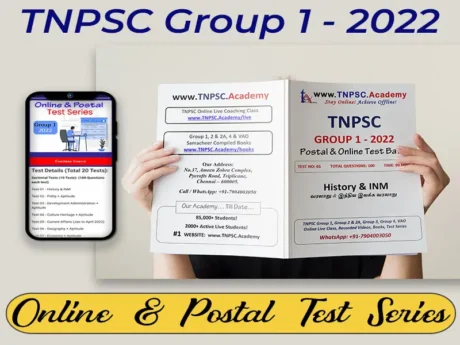
Group 1 | Postal and Online Test Series | 2022
Original price was: ₹3,200.00.₹2,800.00Current price is: ₹2,800.00. 88Class Tests
PRIVATE 67
TNPSC Group 1 - Test Series - 2019
Original price was: ₹3,500.00.₹2,800.00Current price is: ₹2,800.00. 542





Group 2 & 2A Courses
Class Tests
PRIVATE 67TNPSC Group 2 and 2A - Test Series - 2019
Original price was: ₹2,400.00.₹1,800.00Current price is: ₹1,800.00. 527TNPSC Group 2 and 2A MAINS - 2022
PRIVATE 344TNPSC Group 2 and 2A - Test Series - 2019 - தமிழ்
Original price was: ₹2,400.00.₹1,800.00Current price is: ₹1,800.00. 175





www.tnpsc.academy – TNPSC Current Affairs August 28, 2020 (28/08/2020)
Download as PDF (English)
Topic: Political Systems in India, General Administration
States can have sub-groups among SCs/STs: Supreme Court
A five-judge Bench of the Supreme Court has held that States can sub-classify Scheduled Castes and Scheduled Tribes in the Central List to provide preferential treatment to the “weakest out of the weak”.
Background:
The judgment is based on a reference to the Constitution Bench the question of law involving Section 4(5) of the Punjab Scheduled Caste and Backward Classes (Reservation in Services) Act, 2006.
The legal provision allows 50% of the reserved Scheduled Castes seats in the State to be allotted to Balmikis and Mazhabi Sikhs.
Need for sub-classification- Observations made by the Supreme Court:
Reservation has created inequalities within the reserved castes itself.
There is a “caste struggle” within the reserved class as benefit of reservation are being usurped by a few.
It is clear that caste, occupation, and poverty are interwoven.
The State cannot be deprived of the power to take care of the qualitative and quantitative difference between different classes to take ameliorative measures.
What does the Constitution of India state?
According to the Constitution of India, under article 341(1), the President of India, after consultation with the Governor, may specify, “the castes, races, tribes or parts of groups within castes or races, which shall be deemed to be Scheduled Castes”.
Accordingly, the President has notified the Scheduled Castes in the order called ‘Constitution (Scheduled Castes) Order-1950’ and the ‘Scheduled Castes and Scheduled Tribes List (Modification) Order-1956.
However, under article 341(2), the Parliament of India by law can include or exclude the above-mentioned groups from the list of the Scheduled Castes.
Does the latest judgment amount to tinkering of the Central list?
No, said the Supreme Court bench. Sub-classifications within the Presidential/Central List does not amount to “tinkering” with it. No caste is excluded from the list. The States only give preference to weakest of the lot in a pragmatic manner based on statistical data.
Besides, Preferential treatment to ensure even distribution of reservation benefits to the more backward is a facet of the right to equality.
Why this judgment is significant?
It fully endorses the push to extend the creamy layer concept to the Scheduled Castes and Scheduled Tribes.
The judgment records that “Citizens cannot be treated to be socially and educationally backward till perpetuity; those who have come up must be excluded like the creamy layer”.
The entire basket of fruits cannot be given to the mighty at the cost of others under the guise of forming a homogenous class.
Implications of the judgment:
With this, the Bench took a contrary view to a 2004 judgment delivered by another Coordinate Bench of five judges in the E.V. Chinnaiah case.
In this case, the court had held that allowing States to unilaterally “make a class within a class of members of the Scheduled Castes” would amount to tinkering with the Presidential list.
Now with two numerically equal Benches of judges holding contrary viewpoints, the issue has been referred to a seven-judge Bench of the court.
_
Topic: International Events
Hurricane Laura
Hurricane Laura, has made landfall in southwestern Louisiana (South Central United States) with wind speeds reaching up to 250 km (about 150 miles) an hour.
Hurricane Laura is a Category 4 storm. A Category 4 storm has wind speeds between 130-156 mph and can uproot trees and bring down power lines.
The Saffir-Simpson Hurricane Wind Scale: Hurricanes are categorized on the Saffir-Simpson Hurricane Wind Scale, which rates them on a scale of 1 to 5 based on wind speed.
Worldwide Terminology of Tropical Cyclones:
Depending on where they occur, hurricanes may be called typhoons or cyclones. They are given many names in different regions of the world:
Typhoons: tropical cyclones are known as Typhoons in the China Sea and Pacific Ocean.
Hurricanes: In the West Indian islands in the Caribbean Sea and Atlantic Ocean.
Tornados: In the Guinea lands of West Africa and southern USA.
Willy-willies: In north-western Australia and
Tropical Cyclones: In the Indian Ocean Region.
_
Topic: Latest inventions on Science and Technology
Controlling Dengue Using Bacteria
Researchers from the World Mosquito Program have used mosquitoes infected with Wolbachia bacteria to successfully control dengue in Yogyakarta city of Indonesia.
The World Mosquito Program is an Australia-based not-for-profit initiative that exists to protect the global community from mosquito-borne diseases.
Wolbachia bacteria:
Wolbachia are natural bacteria present in up to 60% of insect species, including some mosquitoes. However, Wolbachia is not usually found in the Aedes aegypti mosquito, the primary species responsible for transmitting human viruses such as Zika, dengue, chikungunya and yellow fever.
Wolbachia is safe for humans, animals and the environment.
Key facts:
The Aedes aegypti mosquito, that spreads Dengue and other diseases such as chikungunya, Zika and yellow fever cannot do so when they are artificially infected with a bacterium, Wolbachia.
The bacteria Wolbachia “inhibits” viral infection, that is, even if people encounter mosquito bite, they will not be infected. This happens because bacteria does not allow the virus to replicate in the mosquito thereby minimising its number within the mosquito.
Method: The scientists infected some mosquitoes with Wolbachia and then released these in the city where they bred with local mosquitoes, until nearly all mosquitoes in the area were carrying Wolbachia bacteria. This is called the Population Replacement Strategy.
Results: At the end of 27 months, the researchers found that the incidence of dengue was 77% lower in areas where Wolbachia-infected mosquitoes had been released, as compared to areas without such deployments.
This method does not only block Dengue Virus but also many other viruses present in mosquitoes.
Dengue:
Dengue is a mosquito-borne tropical disease caused by the dengue virus (Genus Flavivirus), transmitted by several species of mosquito within the genus Aedes, principally Aedes aegypti.
Symptoms include fever, headache, muscle and joint pains, and a characteristic skin rash.
There are four strains from Type I-IV, of which Type-II and IV are considered more severe.
Incidence of dengue has grown dramatically around the world in recent decades, with a vast majority of cases under-reported, according to the World Health Organization (WHO).
WHO estimates 39 crore dengue virus infections per year, of which 9.6 crore show symptoms.
_
Topic: Latest Diary of Events
World Urdu Conference
World Urdu Conference was recently organised by National Council for Promotion of Urdu Language (NCPUL) in New Delhi.
NCPUL is an autonomous body under the Ministry of Human Resource Development (HRD) (The Ministry was renamed as Ministry of Education), Department of Secondary and Higher Education, Government of India.
It was setup in 1996 as the National Nodal Agency for the promotion of the Urdu language.
_
Topic: Profile of States
Great Andamanese tribe
It is a Particularly Vulnerable Tribal Group (PVTG). They are one of five PVTGs that reside in Andamans archipelago. They speak Jeru dialect among themselves and their number stands at 51.
The five PVTGS residing in Andamans are Great Andamanese, Jarwas, Onges, Shompens and North Sentinelese.
Why in News? Five members of the Great Andamanese tribe have tested positive for COVID-19.
_
Topic: International Events
Togo
Togo has become the first country in Africa to eliminate human African Trypanosomiasis or sleeping sickness, a disease caused by parasites transmitted through infected tsetse flies. The World Health Organization (WHO) August 27, 2020 certified so, after the country applied for it in 2018.