
TNPSC Books
-
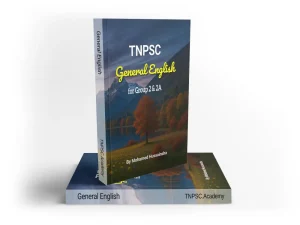
 TNPSC General English Book - for Group 2 & 2A
Original price was: ₹1,000.00.₹850.00Current price is: ₹850.00.
-
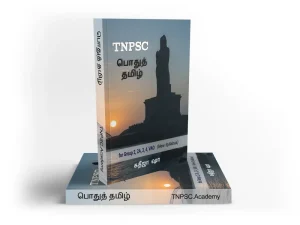
TNPSC பொதுத் தமிழ் Book - for Group 2, 2A, 3, 4 & VAO
Original price was: ₹1,000.00.₹850.00Current price is: ₹850.00.
Group 1 Courses

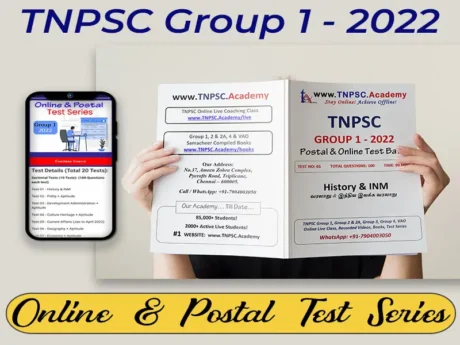
Group 1 | Postal and Online Test Series | 2022
Original price was: ₹3,200.00.₹2,800.00Current price is: ₹2,800.00. 88Class Tests
PRIVATE 67
TNPSC Group 1 - Test Series - 2019
Original price was: ₹3,500.00.₹2,800.00Current price is: ₹2,800.00. 542





Group 2 & 2A Courses
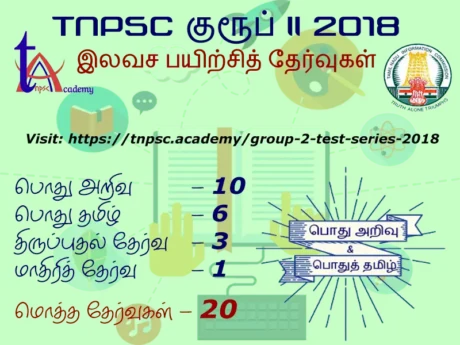
TNPSC Group 2 and 2A - Test Series - 2019
Original price was: ₹2,400.00.₹1,800.00Current price is: ₹1,800.00. 527TNPSC Group 2 and 2A MAINS - 2022
PRIVATE 344Class Tests
PRIVATE 67TNPSC Group 2 and 2A - Test Series - 2019 - தமிழ்
Original price was: ₹2,400.00.₹1,800.00Current price is: ₹1,800.00. 175



www.tnpsc.academy – TNPSC Current Affairs August 22, 2020 (22/08/2020)
Download as PDF (English)
Topic: Latest International Events, Places in News
Chora Museum (Kariye) and Sakarya New Gas Field: Turkey
Recently, the Turkish President reconverted the Chora museum into a mosque. This is the second museum after Hagia Sophia to be converted into a mosque. Turkey has also found a new gas field in Black Sea.
Chora Museum:
It was built initially as a church in 534 AD, during the early Byzantine period. In the 11th century, its internal walls, pillars and domes were covered with mosaics and frescoes showing scenes from biblical stories.
After the conquest of Constantinople (capital city of the Roman Empire) by the Ottomans (1453), the church was seized and turned into a mosque in 1511. In 1945, it was converted into a museum. Chora is also known as Kariye in Turkish and the mediaeval Church of the Holy Saviour in Chora.
Sakarya Gas Field in Black Sea:
Recently, Turkey has found its biggest ever (a 320 billion cubic metre) natural gas field discovery in Black Sea. The gas field will become functional in 2023.
Turkey has officially announced the discovery of a large natural gas reserve in the Black Sea that could satisfy the country’s gas needs for nearly seven years.
The oil reserve was named Sakarya, after Turkey’s third largest river, located in the Black Sea region and the site of the battle that determined the fate of the independence war in August 1921.
Turkey has recently been diversifying its energy sources, decreasing the Russian share in gas imports from 52 percent to 33 percent in the last three years. Turkey has been purchasing more US and Qatari liquefied natural gas to replace imports from Russia and Iran.
_
Topic: International Events, India and its Neighbouring countries
Sri Lanka to Draft a New Constitution
The Sri Lankan President Gotabaya Rajapaksa (elected in 2019), while addressing the inaugural session of the Parliament, said that Sri Lanka will draft a new Constitution and abolish the 19th Amendment that curtailed the powers of the President and strengthened the role of Parliament.
Sri Lanka’s new Cabinet includes members from the Rajapaksa family.
Mahinda Rajapaksha is the Prime Minister of Sri Lanka.
The Rajapaksa led Sri Lanka People’s Party (SLPP) won a landslide victory in the recently held parliamentary elections (August 2020), allowing the influential family to consolidate power for the next five years.
19th Amendment:
It was passed in 2015 during the former President Maithripala Sirisena-Prime Minister Ranil Wickremesinghe’s term (2015-19).
It sought not only to clip the President’s executive powers, but also to strengthen independence of key pillars such as the judiciary, public service and elections.
It brought back the two-term limit on Presidency.
It was hailed by many, including members of civil society, as a progressive legislation in contemporary Sri Lankan history, even as its critics found it falling short in some respects.
However, the Rajapaksa camp viewed its clauses as primarily intended to prevent its leaders’ return to power.
It prevented dual citizens from contesting elections. At the time, two of the Rajapaksa family members including the current president were dual citizens of the USA and Sri Lanka.
Its abolishment will strengthen Rajapaksa’s grip on power because the country will return to its previous constitutional status, in which the President could appoint officials for the police, judiciary and public service and dissolve Parliament anytime after one year.
New Constitution:
The President said that the new Constitution would prioritise the concept of “one country, one law for all the people”. Sri Lanka’s constitution has been changed 19 times from 1978, creating a lot of uncertainties and confusion.
Changes will be made to ensure the stability of Parliament and people’s direct representation, while retaining the salutary aspects of the proportional representation system.
Rights activists see the planned changes to the Constitution as an attempt to further empower the SLPP and the Rajpaksha brothers’ mainly Buddhist – Sinhalese speaking electorate.
The Rajapaksa family, which dominated the government from 2005 to 2015, witnessed the climax of the country’s long civil war (1983-2009).
The war divided Sri Lanka along ethnic lines – pitting the majority Buddhist Sinhalese-dominated government against Tamil rebels who wanted a separate state.
The rebels were defeated by government forces in 2009.
Way Forward:
For Sri Lanka, the Constitution-making process of the new Government shall strengthen Sri Lanka’s democracy and provide an inclusive platform for the country to achieve prosperity for all.
For India, it should push for the reconciliation efforts for the Tamils in Sri Lanka while remaining sensitive to Sri Lanka’s security concerns.
_
Topic: New Appointments, Persons in News
Election Commissioner
The Centre has appointed Rajiv Kumar as the Election Commissioner. He has been appointed in place of Ashok Lavasa, who has resigned to join the Asian Development Bank (ADB).
Constitutional Provisions:
The Election Commission of India is an autonomous constitutional authority responsible for administering Union and State election processes in India. The body administers elections to the Lok Sabha, Rajya Sabha, State Legislative Assemblies in India, and the offices of the President and Vice President in the country (Article 324).
It is not concerned with the elections to panchayats and municipalities in the states. For this, the Constitution of India provides for a separate State Election Commission.
The Election Commission shall consist of the chief election commissioner and such number of other election commissioners, if any, as the President may from time to time fix.
Presently, it consists of the Chief Election Commissioner and two Election Commissioners.
_
Topic: Latest inventions on Science and Technology
Development of Synthetic Flavonoids
Recently, scientists from Agharkar Research Institute (ARI), Pune have found the first synthetic route for producing flavonoids molecules related to the treatment of tuberculosis and chikungunya.
ARI is an autonomous institute of the Department of Science and Technology (DST), Government of India.
Key Facts:
It is for the first time that scientists have been able to synthesize the flavonoid molecules such as rugosa flavonoids, podocare flavone and isoflavone in a lab.
These three molecules have so far been isolated from plants only and are found to inhibit tuberculosis and chikungunya.
Flavonoids:
Flavonoids are part of the polyphenol class of phytonutrients (plant chemicals) found in almost all fruits and vegetables. Along with carotenoids (organic pigments), they are responsible for the vivid colours in fruits and vegetables.
Polyphenols have historically been used in Chinese and Ayurvedic medicine and are associated with skin protection, brain function, blood sugar and blood pressure regulation.
These are powerful antioxidants with anti-inflammatory and immune system benefits as well. A diet rich in flavonoids can protect from diseases related to heart, liver, kidney, brain and other infectious diseases.
Significance of the Research:
Availability: It will ensure their availability at all seasons without the dependence on natural timings of the plantations.
Less-exploitative: Acquiring them from labs will solve the problem of over-exploitation of medicinal plants which puts an extra burden on the environment.
Cost-effective: The development method in labs is simple and cost-effective as well.
Since flavonoids boost-up immunity, a flavonoid-rich diet is recommended to stay safe from Covid-19.
_
Topic: Awards and Honours
National Sports Day Awards 2020
A total of 74 sportspersons were chosen for the national awards, including five for Rajiv Gandhi Khel Ratna Award, eight for Dronacharya Award in Life- Time Category, five Dronacharya Award in regular category, a whopping 27 Arjuna awardees, 15 Dhyan Chand awardees.
Rajiv Gandhi Khel Ratna:
For the first time five sports persons will be receiving the Rajiv Gandhi Khel Ratna on the occasion of the National Sports Day on 29th August.
Rohit Sharma (Cricket), Mariyappan Thangavelu (Para Athletics), Manika Batra (Table Tennis), Vinesh Phogat (Wrestling), Rani Rampal (Hockey).
Key Facts:
Ms. Rani will become only the third Indian hockey player after Dhanraj Pillay and Sardar Singh to receive the Khel Ratna.
Shri Mariyappan T. is the only third Indian para-athlete to be awarded the Khel Ratna award, after former Paralympic medallists Devendra Jhajharia and Deepa Malik.
Rajiv Gandhi Khel Ratna Award is the highest sporting award given by the Ministry of Youth Affairs and Sports for the spectacular and most outstanding performance in the field of sports by a sportsperson over a period of four years.
The award comprises a medallion, a certificate, and a cash prize of Rs 7.5 lakh. The National Sports Day is observed every year across India on 29th August to mark the birth anniversary of the legendary hockey player Dhyan Chand who was born on 29th August 1905.
_
Topic: Latest inventions on Science and Health
Tattoo Sensor for Monitoring Health
Recently the scientists from Indian Institute of Science, Bangalore have fabricated a skin conformal tattoo sensor about 20 micrometre thick.
Key Facts:
The scientists were working on wearable sensors that can retract information from the human body using its skin (largest organ of the human body).
The tatto sensor promises continuous monitoring of vital health parameters of an individual, like pulse rate, respiration rate, and UV rays exposure, skin hydration level, glucose monitoring, and so on.
It is non-invasive and does not interfere with the daily activities of the user. The sensor has a fast response and follows easy fabrication steps and can be patterned into any shape and size using a laser.
Benefit: The sensor serves as a single conduit for sensing respiration rate and pulse, dispensing with the need of mounting multiple sensors. It has the potential to replace rigid and bulky health monitoring devices.
_
Topic: Profile of States
Dragonfly Festival
The first-ever State Dragonfly Festival, also known as Thumbimahotsavam 2020 will be organized in Kerala jointly by the World Wide Fund for Nature (WWF)-India State unit and Society for Odonate Studies (SOS).
Key Facts:
It will be the part of National Dragonfly Festival being organised by the WWF India, Bombay Natural History Society & Indian Dragonfly Society,
The third edition of the National Dragonfly Festival was organized online in August, 2020. It aims at building awareness about the importance of dragonflies and damselflies and the need to conserve them.
Dragonflies act as important bio-indicators of the ecological health of an area.