
TNPSC Books
-
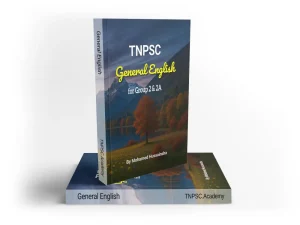
 TNPSC General English Book - for Group 2 & 2A
Original price was: ₹1,000.00.₹850.00Current price is: ₹850.00.
-
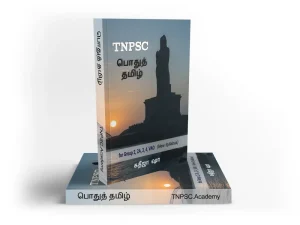
TNPSC பொதுத் தமிழ் Book - for Group 2, 2A, 3, 4 & VAO
Original price was: ₹1,000.00.₹850.00Current price is: ₹850.00.
Group 1 Courses

Group 1 | Postal and Online Test Series | 2022
Original price was: ₹3,200.00.₹2,800.00Current price is: ₹2,800.00. 88
TNPSC Group 1 - Test Series - 2019
Original price was: ₹3,500.00.₹2,800.00Current price is: ₹2,800.00. 542Class Tests
PRIVATE 67





Group 2 & 2A Courses
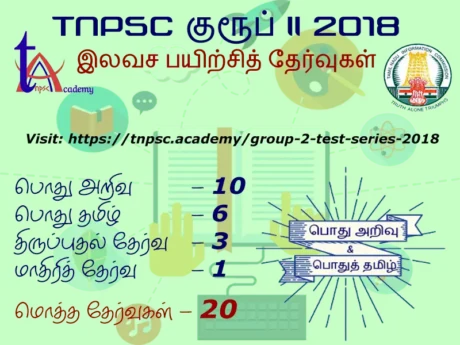
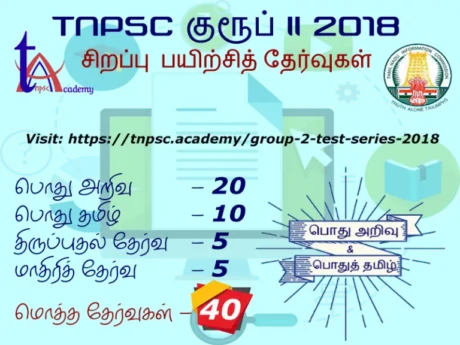
TNPSC Group 2 and 2A - Test Series - 2019 - தமிழ்
Original price was: ₹2,400.00.₹1,800.00Current price is: ₹1,800.00. 175TNPSC Group 2 and 2A - Test Series - 2019
Original price was: ₹2,400.00.₹1,800.00Current price is: ₹1,800.00. 527TNPSC Group 2 and 2A MAINS - 2022
PRIVATE 344Class Tests
PRIVATE 67







www.tnpsc.academy – TNPSC Current Affairs July 23, 2020 (23/07/2020)
Download as PDF
Topic: International Events
G20 Digital Economy Ministers Meeting
Recently, a virtual meeting of G20 Digital Economy Ministers was hosted by Saudi Arabia in which Indian Union Minister for Electronics and Information Technology represented India.
Saudi Arabia is holding the presidency of G20 currently.
Key Facts:
Few major initiatives taken by India to tackle Covid-19 were highlighted:
Early lockdowns which helped in curbing the spread of the virus as well as preparing for the upcoming challenges effectively.
Digital innovations for managing Covid-19:
Initiatives like Aarogya Setu mobile app, Covid-19 Quarantine Alert System (geofencing system for monitoring quarantined patients) and Covid-19 Savdhan (bulk messaging systems).
Digital innovations for helping people in general:
Direct Benefit Transfers and digital payments ensured that even the weakest in the society was provided various financial relief during the lockdown.
_
Topic: Profile of States
Reasons Behind Pink Water of Lonar Lake
According to the Agharkar Research Institute, the colour of Lonar lake water in Maharashtra’s Buldhana district turned pink due to a large presence of the salt-loving ‘Haloarchaea’ microbes.
The colour of the lake water recently turned pink, which not only surprised locals, but also nature enthusiasts and scientists.
The water samples have been tested by the Nagpur-based National Environmental Engineering Research Institute (NEERI) and the Agharkar Research Institute in Pune.
Key facts:
It has been assumed that the absence of rain, less human interference (owing to lockdown) and high temperature resulted in the evaporation of water which increased its salinity and pH.
pH is a measure of how acidic/basic water is.
The increased salinity and pH facilitated the growth of halophilic microbes, mainly Haloarchaea.
Halophiles are a group of microorganisms that can grow and often thrive in areas of high salt (NaCl) concentration.
Lonar Lake:
Lonar Lake, also known as Lonar crater, is a saline and alkaline lake located at Lonar in Buldhana district, Maharashtra.
It is situated inside the Deccan Plateau—a massive plain of volcanic basalt rock created by eruptions.
_
Topic: Profile of States
Madhubani Paintings
Recently, artists from Madhubani district of Bihar became famous for making masks with hand-painted Madhubani motifs.
Motif is a decorative image or design, especially a repeated one forming a pattern.
Key Facts:
Madhubani painting has its origins in Mithila region of Bihar. The painting is one of the oldest and most famous Indian art forms which is also practised in Nepal.
Traces of Madhubani art can also be noticed in the Ramayana, the Indian epic. It is also known as Mithila or Madhubani art.
_
Topic: Discovery of Specific Species
Indian Bullfrog (Hoplobatrachus tigerinus)
It is also called as Bullfrog, Golden Frog, Green Frog, Tiger Frog etc.
IUCN Red List: Least Concern.
It is native to the Indian subcontinent (Afghanistan, Bangladesh, India, Myanmar, Nepal and Pakistan) and is the largest frog in India.
These are prolific breeders (producing many offspring), have short breeding seasons, and each egg clutch can contain up to 5,750 eggs.
Bullfrogs eat the native frogs as well and their diets overlap, indicating a possibility of competition. It is one of the invasive species on the islands of Andaman and Nicobar.
_
Topic: International News, Persons in News
International Union of Railways (UIC)
DG RPF Arun Kumar nominated as Vice-Chairman of International Union of Railways.
About UIC:
The UIC is the global platform for railway systems working on inter-operability, developing common technical standards for railways across the world and strengthening what is called “rail diplomacy”.
Headquarters: Paris, France. Members: 144 including India.
_
Topic: Places in News, Profile of States
Kakrapar Atomic Plant Achieves Criticality
Recently, the third unit of the Kakrapar Atomic Power Project (KAPP-3) in Tapi district of Gujarat achieved its first criticality.
Criticality:
Criticality is the first step towards power production. A nuclear reactor is said to be critical when the nuclear fuel inside a reactor sustains a fission chain reaction.
In simple terms, the power plant reached the normal operating condition of a reactor. It indicates that the plant is now set to generate power.
Key facts:
The first Pressurised Heavy Water Reactor (PHWR) of 220 MWe was commissioned on May 6, 1993, while the second unit of similar capacity was commissioned on September 1, 1995. These two units were based on Canadian technology.
The third reactor at Kakrapar is the front runner in a series of 16 indigenous 700 MWe PHWRs which are under various stages of development.
Four units of the 700MWe reactor are currently being built at Kakrapar (KAPP-3 and 4) and Rawatbhata (RAPS-7 and 8).
Currently, nuclear power capacity constitutes less than 2% of the total installed capacity of 3,68,690 MW (end-January 2020).
KAPP-3:
KAPP-3 is the country’s first 700 MWe (megawatt electric) unit, and the biggest indigenously developed variant of the Pressurised Heavy Water Reactor (PHWR).
Until now, the biggest reactor size of indigenous design was the 540 MWe, two of which have been deployed in Tarapur, Maharashtra.
A PHWR is a nuclear power reactor, commonly using unenriched natural uranium as its fuel, that uses heavy water (deuterium oxide D2O) as its coolant and moderator.
PHWR technology was started in India in the late 1960s with the construction of the first 220 MWe reactor, Rajasthan Atomic Power Station (RAPS-1).
State-owned Nuclear Power Corporation of India Ltd (NPCIL) had awarded the reactor-building contract for both KAPP-3 and 4 in 2010.