
TNPSC Books
-
 TNPSC பொதுத் தமிழ் Book - for Group 2, 2A, 3, 4 & VAO
Original price was: ₹1,000.00.₹850.00Current price is: ₹850.00.
-
TNPSC General English Book - for Group 2 & 2A
Original price was: ₹1,000.00.₹850.00Current price is: ₹850.00.
Group 1 Courses

TNPSC Group 1 - Test Series - 2019
Original price was: ₹3,500.00.₹2,800.00Current price is: ₹2,800.00. 542
Class Tests
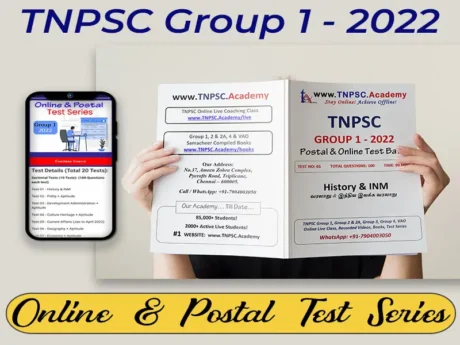
PRIVATE 67Group 1 | Postal and Online Test Series | 2022
Original price was: ₹3,200.00.₹2,800.00Current price is: ₹2,800.00. 88



Group 2 & 2A Courses
TNPSC Group 2 and 2A - Test Series - 2019
Original price was: ₹2,400.00.₹1,800.00Current price is: ₹1,800.00. 527TNPSC Group 2 and 2A MAINS - 2022
PRIVATE 344Class Tests
PRIVATE 67TNPSC Group 2 and 2A - Test Series - 2019 - தமிழ்
Original price was: ₹2,400.00.₹1,800.00Current price is: ₹1,800.00. 175





www.tnpsc.academy – TNPSC Current Affairs July 09, 2020 (09/07/2020)
Download as PDF
Topic: International Events
UAE keen on open-sky policy with India
The United Arab Emirates has said that it is keen to have an open-sky agreement with India. It asked India to look at Open-sky policy separately from fifth and sixth freedoms (of air).
The issue of fifth and sixth freedoms of air has been a sore point between airlines in India and the UAE.
What is Open Sky policy?
The agreement will not only encourage connectivity and passenger travel between the two countries, but will also result in reduction in airfares on these routes.
The National Civil Aviation Policy, 2016, allows the government to enter into an ‘open sky’ air services agreement on a reciprocal basis with SAARC nations as well as countries beyond a 5,000 kilo metre radius from New Delhi.
It implies that nations within this distance need to enter into a bilateral agreement and mutually determine the number of flights that their airlines can operate between the two countries.
India has already signed open sky agreements with Greece, Jamaica, Guyana, Czech Republic, Finland, Spain and Sri Lanka.
Freedoms of air:
International air travel is governed by various freedoms of air.
The degree of “sky openness” depends on the freedoms of the air in the country granted to foreign airlines. There are 9 such freedoms according to the 1944 Convention on International Civil Aviation.
Importantly,
First freedom of air allows a carrier to take off from its home state.
Second freedom of air allows it to land in a second country.
Third and fourth freedoms of air allow the airline to take off from the country it has landed in and come back to land at its home base.
The fifth and sixth freedoms allow airlines to carry passengers picked from one country and fly them to a third country rather than the country from which the airline originated.
_
Topic: Geographical Landmarks
Production of lithium in stars
A forty-year-old puzzle regarding the production of lithium in stars has been solved by Indian researchers.
What was the puzzle all about?
Stars, as per known mechanisms of evolution, actually destroy lithium as they evolve into red giants. Planets were known to have more lithium than their stars — as is the case with the Earth-Sun pair.
However, leading to a contradiction, some stars were found that were lithium-rich.
This posed a puzzle — if stars do not produce lithium, how do some stars develop to become lithium rich?
So far, the planet engulfment theory was quite popular. For example, Earth-like planets may increase the star’s lithium content when they plunge into their star’s atmosphere when the latter become Red Giants.
Latest findings:
When stars grow beyond their Red Giant stage into what is known as the Red Clump stage, they produce lithium in what is known as a Helium Flash and this is what enriches them with lithium.
The study also challenges the present understanding of nucleosynthesis in stars.
What is the big bang nucleosynthesis (BBN)?
The Big Bang Nucleosynthesis theory predicts that roughly 25% the mass of the Universe consists of Helium. It also predicts about 0.01% deuterium, and even smaller quantities of lithium.
It is the production of nuclei other than those of the lightest isotope of hydrogen during the early phases of the Universe. Primordial nucleosynthesisis believed by most cosmologists to have taken place in the interval from roughly 10 seconds to 20 minutes after the Big Bang.
Origin of Lithium:
It was first produced in the Big Bang, around 13.7 billion years ago when the universe came into being, along with other elements.
While the abundance of other elements grew millions of times, the present abundance of lithium in the universe is only four times the original [Big Bang] value. It is actually destroyed in the stars. The Sun, for instance, has about a factor of 100 lower amount of lithium than the Earth.
_
Topic: Latest inventions on Science and Health
Sri Lanka and Maldives – South-East Asia Region of WHO to Eliminate Both Rubella and Measles
Geneva-based World Health Organization (WHO) has announced that Sri Lanka and the Maldives have eliminated Rubella Virus.
With this, Sri Lanka and the Maldives became the first two countries from the South East Asia Region of WHO to have successfully eliminated both the Measles and Rubella Virus.
Measles Virus Eliminated by 5 Countries from the Region:
In 2017-18, Bhutan, Timor-Leste, North Korea and the Maldives were the four countries from the South-East Asia Region of the WHO to successfully eliminate Measles Virus. In July 2019, Sri Lanka became the third nation from the South-East Asia Region of WHO to eliminate Measles. The target year set by the WHO for eliminating Measles from the South-East Asia Region is 2023 (earlier was 2020, Revised in September 2019 to 2023).