
TNPSC Books
-
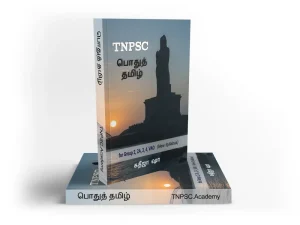
 TNPSC பொதுத் தமிழ் Book - for Group 2, 2A, 3, 4 & VAO
Original price was: ₹1,000.00.₹850.00Current price is: ₹850.00.
-
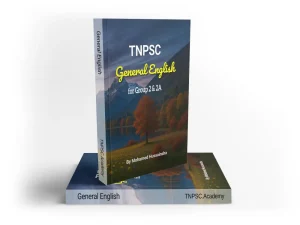
TNPSC General English Book - for Group 2 & 2A
Original price was: ₹1,000.00.₹850.00Current price is: ₹850.00.
Group 1 Courses

Class Tests
PRIVATE 67
TNPSC Group 1 - Test Series - 2019
Original price was: ₹3,500.00.₹2,800.00Current price is: ₹2,800.00. 542Group 1 | Postal and Online Test Series | 2022
Original price was: ₹3,200.00.₹2,800.00Current price is: ₹2,800.00. 88




Group 2 & 2A Courses
TNPSC Group 2 and 2A - Test Series - 2019
Original price was: ₹2,400.00.₹1,800.00Current price is: ₹1,800.00. 527TNPSC Group 2 and 2A - Test Series - 2019 - தமிழ்
Original price was: ₹2,400.00.₹1,800.00Current price is: ₹1,800.00. 175TNPSC Group 2 and 2A MAINS - 2022
PRIVATE 344Class Tests
PRIVATE 67





www.tnpsc.academy – TNPSC Current Affairs June 12, 2020 (12/06/2020)
Download as PDF
Topic: Profile of States, Latest Diary of Events
A declared foreigner and foreigners’ tribunal
Siddeque Ali has become the last declared foreigner to be released from the only detention centre in Barak Valley in Assam as the beneficiary of a Supreme Court order.
What has the Court said?
In April this year, amid the coronavirus pandemic, the Supreme Court had directed the release of those detainees who were declared foreigners and have been lodged in the detention centres of Assam for two years or more.
The Court had also lowered the personal bond amount from Rs 1 lakh to Rs 5,000. So far, 339 DFs have been released from the detention centres since April 13.
Who is a declared foreigner?
A declared foreigner, or DF, is a person marked by any of the 100 Foreigners’ Tribunals (FTs) in Assam for allegedly failing to prove their citizenship after the State police’s Border wing marks him or her as an illegal immigrant.
Why such measures are necessary?
There are a total of 802 declared foreigners in various detention centres of Assam.
Some people are declared foreigners on account of poor documentation or poor legal assistance and lack of resources. They have not been able to prove they are Indian citizens.
Some are either too poor to pursue their cases in higher courts or have their appeals turned down.
29 declared foreigners have died in detention due to various ailments since 2016, with ten of them having died between March 1, 2019 and February 20 this year.
As human beings, they also have at least the basic human right to live and not to die of COVID-19 in the precincts of a prison, which has despicable living conditions.
_
Topic: Environment and Ecology, Profile of States
Census of Asiatic Lion
Census of Asiatic lion was recently conducted by the Gujarat government and the details have been released.
About the lion census:
The census is conducted once every five years. This year it was delayed due to lockdowns.
The first Lion Census was conducted by the Nawab of Junagadh in 1936; since 1965, the Forest Department has been regularly conducting the Lion Census every five years.
The 6th, 8th and 11th Censuses were each delayed by a year, for various reasons.
Key features:
28% rise in population of Lions: Total estimated Lions in Gir region is 674. It was 523 in 2015.
36% Expanse in distribution: Today, Asiatic lions are present in Protected Areas and agro-pastoral landscapes of Saurashtra covering nine districts, over an expanse of about 30,000 sq. km. It was 22,000 sq. km in 2015.
Factors responsible for steady rise in population:
Over the last several years, the lion population in Gujarat has been steadily rising.
This is powered by:
community participation
emphasis on technology
wildlife healthcare
proper habitat management
steps to minimise human-lion conflict
–
Topic: Environment and Ecology, Profile of States
Indian Gaur
The first population estimation exercise of Indian gaur carried out in the Nilgiris forest division in February has revealed that more than an estimated 2,000 Indian gaurs inhabit the 300 sq. km range.
Threats: On an average, a total of 60 gaurs die each year in the Nilgiris forest division, many due to accidents, owing to their proximity to human habitations.
About Indian Gaur:
The gaur, Bos gaurus, also called the Indian bison, is one of the largest extant bovines.
It is native to South and Southeast Asia and has been listed as Vulnerable on the IUCN Red List since 1986.
_
Topic: Latest inventions on Science and Health
Anti-viral Viroblock textile technology
Textile major Arvind Limited has announced the launch of an anti-viral textile technology for its fabric and garment products.
Significance:
Research shows that viruses and bacteria, can remain active on textile surfaces for up to two days. Arvind claims that garments treated with HeiQ Viroblock actively inhibit viruses and kill them upon contact, helping to minimize the potential for re-transmission of pathogens through clothing.
What is HeiQ Viroblock?
HeiQ Viroblock NPJ03 is an intelligent Swiss textile technology that is added to the fabric during the final stage of the textile manufacturing process. It is a special combination of advanced silver and vesicle technology.
It has proven effective against SARS-CoV-2, the COVID-19 causing virus. Suitable for all fiber types, from medical nonwovens (e.g. face masks) to fabrics for clothing and home textiles.
_
Topic: Profile of States, Welfare Oriented Govt Schemes and their Utilities
Jagananna Chedodu Scheme
The Andhra Pradesh Chief Minister Jagan Mohan Reddy recently launched “Jagananna Chedodu” scheme. The scheme is to provide financial assistance to barbers, tailors and washer men.
The Jagananna Chedodu scheme is to provide Rs 10,000 per person. It is to benefit 2.47 lakhs of barbers, washer men and tailors. The State Government has transferred Rs 247 crores to the bank accounts so far under the scheme.
_
Topic: Awards and Honours, Eminent Persons in News
Dr Rattan Lal – World Food Prize
The Indian American soil scientist Dr Rattan Lal has won the World Food Prize for mainstreaming and developing soil centric approach in order to increase food production.
Key facts:
Dr Lal’s strategy of restoring soil health has been adopted by three United Nations Climate Change Conferences.
Dr Lal has transformed and explored techniques such as no-tillage, over cropping, mulching and agro forestry. These techniques improved long term sustainability of agro ecosystems and minimized risks of floods, drought and effects of climate change.
Through his research works, Dr Lal had proved that atmospheric carbon can be sequestered in soils.