
TNPSC Books
-
 TNPSC General English Book - for Group 2 & 2A
Original price was: ₹1,000.00.₹850.00Current price is: ₹850.00.
-
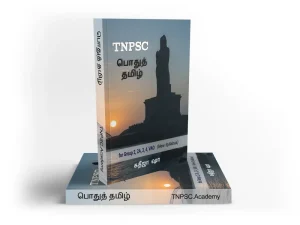
TNPSC பொதுத் தமிழ் Book - for Group 2, 2A, 3, 4 & VAO
Original price was: ₹1,000.00.₹850.00Current price is: ₹850.00.

Group 1 Courses

Group 1 | Postal and Online Test Series | 2022
Original price was: ₹3,200.00.₹2,800.00Current price is: ₹2,800.00. 88Class Tests
PRIVATE 67
TNPSC Group 1 - Test Series - 2019
Original price was: ₹3,500.00.₹2,800.00Current price is: ₹2,800.00. 542





Group 2 & 2A Courses
Class Tests
PRIVATE 67TNPSC Group 2 and 2A MAINS - 2022
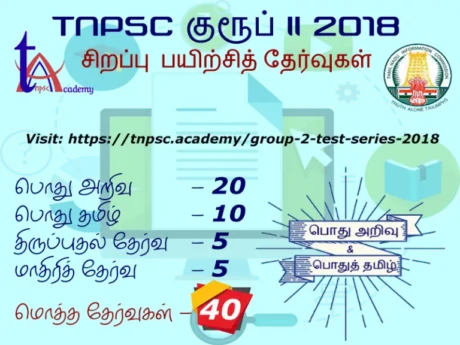
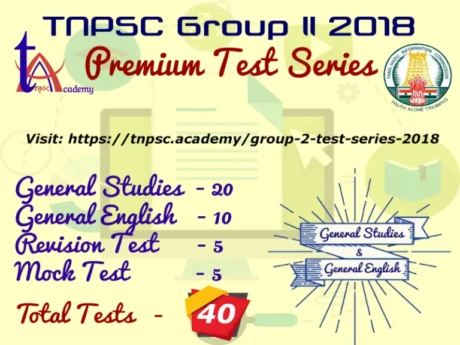
PRIVATE 344TNPSC Group 2 and 2A - Test Series - 2019
Original price was: ₹2,400.00.₹1,800.00Current price is: ₹1,800.00. 527TNPSC Group 2 and 2A - Test Series - 2019 - தமிழ்
Original price was: ₹2,400.00.₹1,800.00Current price is: ₹1,800.00. 175




www.tnpsc.academy – TNPSC Current Affairs June 05, 2020 (05/06/2020)
Download as PDF
Topic: Political System in India, Latest Diary of Events
Law against mob lynching
A pan-Northeast legal group has sought a law to deal specifically with mob lynching. This follows the killing of two people in Assam within a week in May.
How are these cases handled?
There is “no separate” definition for such incidents under the existing IPC. Lynching incidents can be dealt with under Section 300 and 302 of IPC.
Section 302 provides that whoever commits murder shall be punished with death or imprisonment for life and shall also be liable to fine. Offence of murder is a cognisable, non- bailable and non-compoundable offence.
What is meant by Lynching?
Any act or series of acts of violence or aiding, abetting (encouraging) such act/acts thereof, whether spontaneous or planned, by a mob on the grounds of religion, race, caste, sex, place of birth, language, dietary practices, sexual orientation, political affiliation, ethnicity or any other related grounds.
_
Topic: Public Awareness and General Administration, Latest Diary of Events
Periodic Labour Force Survey (PLFS)
PLFS is India’s first computer-based survey which gives estimates of key employment and unemployment indicators like the labour force participation rate, worker population ratio, proportion unemployed and unemployment rate in rural households annually and on a quarterly basis for the urban households.
The PLFS also gives the distribution of educated and unemployed people, which in turn can be used as a basis for skilling of youth to make them more employable by industry.
The survey was launched in 2017 and the first annual report was released (July 2017-June 2018), covering both rural and urban areas, in May 2019.
Labour Force Participation Rate: It is the percentage of people in the labour force (those who are working or seeking or available for work) in the population. Worker Population Ratio is the percentage of employed people.
Key facts:
India’s unemployment rate fell between July 2018 and June 2019 to 5.8% from 6.1% during the same period of 2017-18, even as the labour force participation rate rose to 37.5% from 36.9%.
The worker population ratio also increased, to 35.3% as against 34.7% in the 2017-18.
Urban unemployment rate reduced to 7.7% in 2018-19 from 7.8% and in rural India to 5% from 5.3%.
Female participation rate improved in both urban and rural India during the period under review, going up to 18.6% in 2018-19 from 17.5% the year before.
Challenges ahead:
To retain the falling trend in unemployment rate in 2019-20, which has witnessed a long nationwide lockdown between March and June to prevent the spread of Covid-19, resulting in job losses across sectors.
According to monthly data from the Centre for Monitoring Indian Economy, unemployment rate in India shot up significantly from 7.87% in June 2019 to 23.48% in May 2020.